
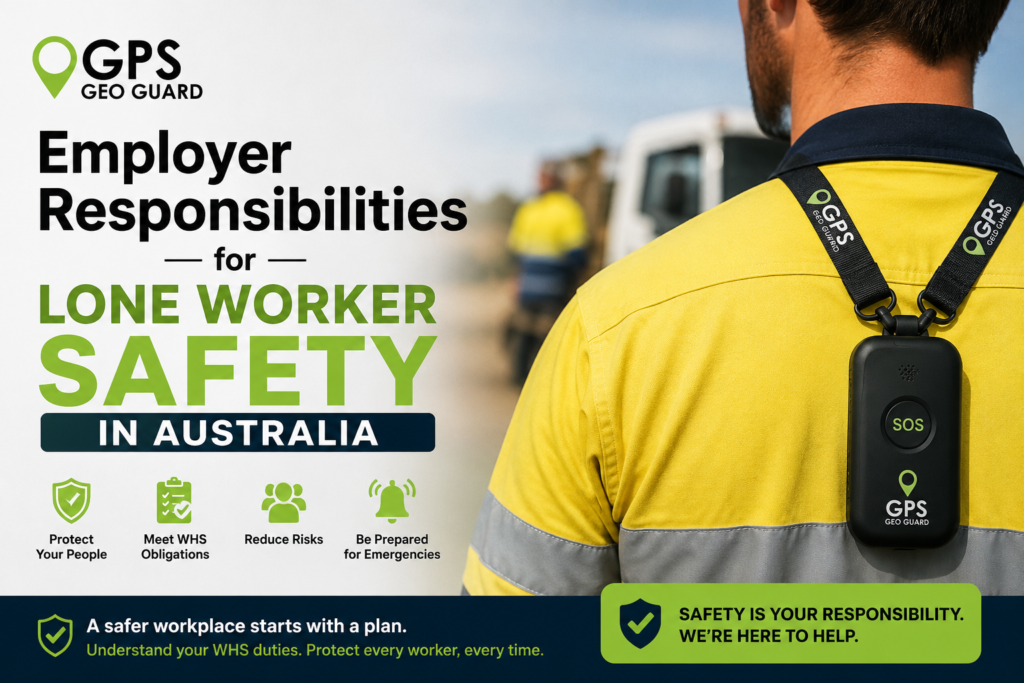
Australian WHS law places a clear duty on employers to protect workers from reasonably foreseeable risks. That responsibility becomes especially important when employees work alone without immediate access to colleagues or on-site assistance.
A lone worker may face risks such as workplace violence, falls, medical emergencies, accidents, or equipment-related incidents without anyone nearby to respond. If something goes wrong, delays in identifying the incident and getting help can increase the consequences.
For this reason, lone worker safety requires more than simply having a workplace safety policy. Employers need to identify risks, provide appropriate training and equipment, establish reliable communication procedures, and have effective emergency response processes in place. Lone worker safety
This guide explains the key responsibilities employers should consider when managing the safety of workers who operate alone.
1. Conduct a Lone Worker Risk Assessment
A comprehensive risk assessment is the foundation of an effective lone worker safety program. Employers need to identify the hazards associated with working alone, rather than assessing only the general risks of the job.
A lone worker risk assessment should consider:
- How long the employee is expected to work alone
- Whether the work location is isolated or difficult to access
- The possibility of workplace violence or aggression
- Falls, injuries, and other physical hazards
- Medical emergencies
- Hazardous equipment or work environments
- Availability of mobile phone coverage
- How quickly assistance could reach the worker
- The worker’s experience, skills, and level of training
Risk assessments should also be reviewed when working conditions, locations, responsibilities, or equipment change. Consulting workers during this process is important because they can often identify practical risks that may not be obvious from a written policy.
2. Provide Appropriate Safety Training
Lone workers need training that reflects the actual conditions and risks of their roles.
Training may include:
- Emergency response procedures
- Workplace violence and de-escalation techniques
- How to report hazards and incidents
- Communication and check-in procedures
- How to use duress or emergency alert devices
- What to do when communication with a supervisor is lost
- Procedures for responding to medical or safety emergencies
General workplace safety training may not be enough for employees who regularly work without nearby assistance. Training should address the additional challenges associated with working alone.
Employers should also provide refresher training regularly rather than treating lone worker safety as a one-time induction requirement.
3. Establish Reliable Communication and Check-In Procedures
Communication is a critical part of protecting employees who work alone. Employers should establish a structured process for workers to confirm that they are safe during their shifts.
Depending on the level of risk, this could include scheduled check-ins, two-way communication, automated monitoring, or dedicated emergency communication devices.
A good check-in procedure should clearly define:
- When the worker needs to check in
- Who receives the check-in
- What happens if a check-in is missed
- How many contact attempts should be made
- When the situation should be escalated
- Who is responsible for initiating the emergency response
Simply asking workers to call or text a manager may not provide a reliable safety system. Dedicated duress alarm solutions can provide a more structured way to raise an alert and support rapid escalation when a worker needs assistance.
4. Develop Clear Lone Worker Emergency Procedures
Having an emergency contact number available is not the same as having an effective emergency procedure.
Employers should establish a clear response process that explains exactly what should happen when a lone worker is in danger or fails to respond.
Define the Emergency Trigger
The procedure should identify what activates the response. This could include:
- A manual SOS or duress alert
- A missed scheduled check-in
- Automatic fall detection
- Loss of communication
- A worker reporting an immediate threat
Establish an Escalation Process
The emergency procedure should explain who is contacted first and when the situation should be escalated to emergency services.
For example, the response process may involve:
- Receiving the alert or identifying a missed check-in
- Attempting to contact the worker
- Assessing the available information
- Contacting a designated supervisor or emergency contact
- Escalating to police, ambulance, or other emergency services when required
Set Clear Response Timeframes
Every stage should have a defined timeframe. A response plan should not depend on someone eventually noticing that a worker has stopped communicating.
A structured escalation process helps ensure that an emergency is treated consistently, even when the usual manager or supervisor is unavailable.
5. Provide Suitable Safety Equipment
The equipment provided to a lone worker should reflect the hazards identified during the risk assessment.
Depending on the work environment, employers may consider:
- SOS duress buttons for quickly requesting assistance
- Automatic fall detection for workers who may become unconscious or unable to activate an alarm
- GPS-enabled devices to help identify a worker’s location during an emergency
- Two-way voice communication for communication with a monitoring team
- Satellite-based solutions for workers operating outside reliable mobile coverage
The right solution will depend on the role and environment.
For example, an employee working alone in a retail environment at night may have different safety requirements from a technician working at an isolated location. Employers should therefore select equipment based on the actual risks rather than using one solution for every worker.
6. Implement Regular Lone Worker Monitoring
Providing a safety device is only one part of an effective lone worker protection strategy. Employers also need a reliable way to monitor workers and respond when something appears wrong.
Regular monitoring can include:
Scheduled Check-Ins
Automated check-ins can help confirm that a worker remains safe throughout their shift. If a scheduled check-in is missed, the system can initiate the required response process.
24/7 Emergency Monitoring
A dedicated monitoring centre can receive emergency alerts and respond according to predetermined escalation procedures, reducing reliance on a manager noticing that something has gone wrong.
Real-Time Location Tracking
GPS location information can help responders identify where assistance is required, particularly when workers operate across different locations or outside a fixed workplace.
A structured monitoring system can provide a more consistent approach than relying on managers to manually track every worker’s schedule and check-in status.
7. Record and Report Incidents
Every relevant safety event should be properly recorded, including:
- Injuries
- Near misses
- Duress alerts
- Workplace violence incidents
- Falls
- Medical emergencies
- Missed check-ins
- Other situations requiring emergency intervention
Incident records can help employers identify recurring hazards and determine whether existing controls are working effectively.
They also provide valuable information when reviewing workplace safety procedures or investigating an incident.
Importantly, incident management should not end once the immediate emergency has been resolved. Workers may also require appropriate follow-up support after experiencing an injury, threatening situation, or other workplace emergency.
8. Review Lone Worker Safety Measures Regularly
Lone worker safety should be treated as an ongoing process rather than a policy that is created once and forgotten.
Employers should regularly review whether their:
- Risk assessments remain accurate
- Communication procedures are effective
- Check-in schedules are appropriate
- Emergency procedures work as intended
- Safety equipment remains suitable
- Monitoring arrangements provide adequate coverage
- Workers understand their responsibilities
Incident reports, near misses, worker feedback, and changes to working conditions should all be considered during these reviews.
Regular reviews help ensure that safety controls continue to reflect the real risks faced by employees working alone.
Why Lone Worker Safety Requires More Than a Written Policy
A written lone worker policy is important, but it is only effective when supported by practical controls.
An employer may have a detailed risk assessment, but if workers cannot quickly call for assistance, the control measures may not be sufficient. Similarly, a duress device provides limited protection if there is no clear process for receiving and responding to the alert.
An effective approach brings several elements together:
Risk assessment + training + communication + safety equipment + monitoring + emergency response + regular review
This integrated approach helps employers create a workplace safety system that works in practice, not just on paper.
Strengthen Lone Worker Protection with GPS Geo Guard
Employers have an ongoing responsibility to identify and manage risks associated with employees working alone. Effective protection requires more than a written policy; it requires appropriate equipment, communication procedures, monitoring, and a clear emergency response process.
GPS Geo Guard provides Australian employers with solutions designed to support lone worker protection, including duress alarms, 24/7 monitoring, and real-time GPS location tracking.
To learn how a properly monitored safety solution can support your workplace procedures and help protect employees working alone, book a demonstration or request a quote.