

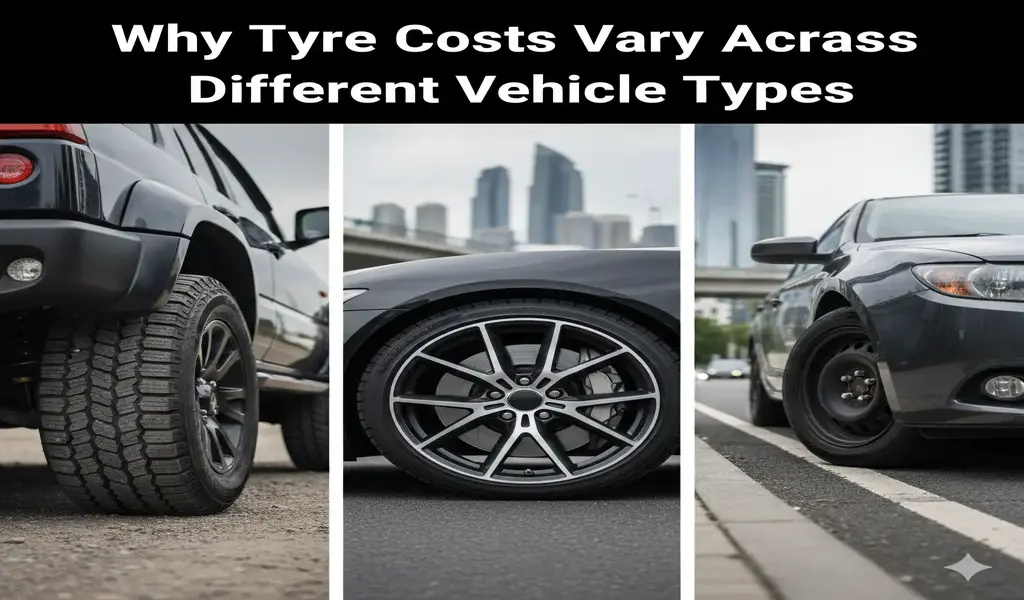
Walking into a tyre shop in the UAE can often feel like a confusing experience. You might see two tyres that look almost identical but have vastly different price tags. For many drivers, this price gap is difficult to understand at first glance.
The reality is that tyres are highly engineered components designed for specific tasks. They are not a one size fits all product for every car on the road. This engineering complexity leads to significant vehicle tyre cost differences across the market.
Understanding why these costs vary helps car owners make smarter purchasing decisions. It prevents the mistake of buying unsuitable tyres just to save money. It also highlights why investing in the right tyre is crucial for safety.
Understanding the Basics of Tyre Pricing
Tyre pricing is driven by raw materials, engineering, and manufacturing complexity. A tyre is a composite of rubber, steel, fabric, and chemical compounds. The quality and quantity of these materials dictate the base cost of production.
Manufacturers invest millions in research and development to create safe products. This cost is amortized across the millions of tyres they sell. However, specialized tyres have a smaller production run, increasing their unit cost.
Logistics also play a role, especially in an import market like the UAE. Shipping heavy rubber products requires significant investment. These foundational costs set the baseline for what you pay at the retailer.
How Tyres Are Designed for Different Vehicles
Engineers design vehicles with specific performance parameters in mind. A small city car prioritizes fuel economy and low rolling resistance. A luxury SUV prioritizes weight support and comfort.
These distinct goals require different tyre constructions. A lightweight tyre uses less material and is cheaper to make. A heavy duty tyre requires reinforced sidewalls and more steel belts.
The intended use of the vehicle dictates the tyre design. Off road vehicles need cut resistant compounds. Sports cars need sticky rubber for high speed cornering.
Why One Size or Type Does Not Fit All Vehicles
Safety standards require tyres to match the vehicle capabilities. You cannot safely install a budget sedan tyre on a high performance sports car. The tyre would likely fail under the stress of acceleration and braking.
Compatibility is determined by the vehicle manufacturer. They specify the minimum requirements for load and speed. Installing a tyre below these specs is dangerous and illegal.
This strict requirement for compatibility limits your choices. You must buy within the specific category designed for your car. This segmentation is a primary driver of price variation.
How Vehicle Type Influences Tyre Cost
The type of vehicle you drive is the biggest predictor of your tyre expenses. The automotive market is divided into segments like sedans, SUVs, and trucks. Each segment has a different average price point for replacement tyres.
Generally, as the vehicle gets larger and heavier, the tyre cost increases. As the vehicle gets faster or more luxurious, the cost also rises. Understanding where your car fits helps manage budget expectations.
Tyre Costs for Small Cars and Sedans
Small passenger cars usually have the most affordable tyres. These vehicles are light and do not require massive load bearing capabilities. They also tend to use smaller wheel rim sizes.
Standard sizes for sedans are mass produced in huge volumes. This economy of scale keeps the price down for the consumer. Competition in this segment is fierce, leading to better deals.
For daily commuters in Sharjah or Dubai, this is good news. Keeping a standard sedan on the road is relatively inexpensive. Tyre replacement does not have to be a major financial burden.
Why SUVs and Crossovers Use More Expensive Tyres
The rise of SUVs in the UAE has changed the tyre market. These vehicles are significantly heavier than sedans. They require tyres with reinforced construction to handle the extra mass.
To support the weight, manufacturers use more layers of ply and steel. This additional material adds to the manufacturing cost. Additionally, SUVs often feature larger rim sizes for aesthetic reasons.
A larger tyre simply uses more rubber and chemical compounds. This physical reality makes SUV tyres inherently more expensive. Drivers upgrading from a sedan to an SUV often face sticker shock.
The Role of Tyre Size, Load Rating, and Speed Rating
When you look at the sidewall of a tyre, you see a string of numbers. These specifications are the technical DNA of the tyre. They define exactly what the tyre can and cannot do.
These specs are the most direct technical reason for vehicle tyre cost differences. Higher capabilities in any of these areas result in a higher price. It is the cost of performance and safety assurance.
How Tyre Size Directly Impacts Pricing
The diameter of the wheel rim is a major cost factor. In recent years, wheel sizes have grown significantly. It is common to see family cars with 18 or 19 inch wheels.
As the rim size increases, the tyre becomes more complex to build. Low profile tyres for large rims require stiff sidewalls to protect the wheel. This engineering challenge commands a premium price.
Drivers looking for the current tyre price in dubai often notice that jumping from a 17 inch to a 19 inch wheel size can double the replacement cost. This is a critical factor to consider when buying a new car. The aesthetic appeal of big wheels comes with a long term maintenance cost.
Load and Speed Ratings That Increase Costs
The load index indicates the maximum weight a tyre can carry. A higher load index requires a stronger internal structure. This is non-negotiable for heavy vehicles or those towing loads.
Speed ratings indicate the maximum speed a tyre can sustain. Tyres rated for high speeds must resist heat buildup and centrifugal force. They use premium materials that do not degrade under stress.
In the UAE, highway speeds are high. Most cars require tyres with at least a V or W speed rating. These high performance ratings ensure safety but add to the cost.
Performance and Premium Tyres vs Standard Options
Within each vehicle category, there are further subdivisions. You can choose between a standard touring tyre and a high performance option. This choice depends on your driving style and priorities.
Performance tyres are designed for grip and handling. Standard tyres focus on longevity and comfort. The technology used to achieve these goals differs, as does the price.
Why Performance Tyres Cost More
Performance tyres use softer rubber compounds. These compounds provide incredible grip but are expensive to formulate. They often include rare materials like silica and specialized polymers.
The internal construction is also more sophisticated. It is designed to keep the tyre contact patch flat during hard cornering. This precision engineering requires advanced manufacturing techniques.
Owners of luxury or sports cars pay for this enhanced driving experience. It provides shorter braking distances and sharper steering response. This performance premium is a standard part of the automotive industry.
When Standard Tyres Are the More Cost Effective Choice
For the average daily driver, extreme performance is unnecessary. Standard touring tyres offer a safe and comfortable ride. They use harder compounds that last longer.
These tyres prioritize fuel efficiency and low noise. They are designed for the reality of commuting in traffic. Because they last longer, they offer better value over time.
Choosing a standard tyre for a family car is a smart financial move. You get the safety you need without paying for race track capabilities. It is about matching the tyre to the real world usage.
Driving Conditions in UAE and Their Impact on Tyre Pricing
The environment in the UAE is unique and demanding. Tyres sold here must meet specific standards known as GCC specs. These regulations ensure tyres can handle the local climate.
This regional requirement affects the supply chain and pricing. Tyres must be imported and stored in climate controlled warehouses. These logistical costs are passed on to the consumer.
Heat, Road Surfaces, and Tyre Wear Patterns
The extreme summer heat in the UAE destroys inferior rubber. Tyres must be able to withstand road temperatures exceeding 60 degrees Celsius. Heat resistant compounds are more expensive to produce.
The road surfaces in the UAE are generally excellent but abrasive. High speed driving on hot asphalt wears down tread quickly. Tyres need to be durable to provide a reasonable lifespan.
This need for durability in extreme conditions drives up the baseline quality. You cannot sell sub standard tyres in this market safely. The price reflects this higher minimum standard of quality.
Why UAE Drivers Often Pay More for Certain Tyres
The demand for specific brands and sizes drives local pricing. Premium brands that have proven their reliability in the heat command higher prices. Drivers are willing to pay for peace of mind.
Certain vehicle models are very popular in the UAE. The tyre sizes for these popular cars are imported in bulk. However, niche sizes for rare cars can be expensive due to lower volume.
Fluctuations in global shipping costs also impact the UAE market. As an import reliant hub, local prices are sensitive to global logistics. This can cause price variations throughout the year.
Balancing Tyre Cost With Long Term Value
Smart car owners look beyond the initial purchase price. They consider the total cost of ownership over the life of the tyres. Vehicle tyre cost differences should be viewed through the lens of value, not just expense.
A cheap tyre that wears out in one year is not a bargain. A premium tyre that lasts three years is often cheaper per month. This long term perspective is essential for budget management.
Cheaper Tyres vs Cost Per Kilometre
Calculating the cost per kilometre is the best way to judge value. Divide the price of the tyre by its expected mileage. Often, mid range or premium tyres offer a lower cost per kilometre.
Cheap tyres may also have higher rolling resistance. This increases your fuel consumption every time you drive. Over the life of the tyre, this wasted fuel can cost more than the savings.
Safety is also a value factor. Avoiding one accident due to better braking pays for the tyres instantly. Premium tyres offer a safety margin that budget tyres cannot match.
How Proper Tyre Choice Reduces Overall Ownership Costs
Selecting the right tyre reduces strain on your vehicle. Good tyres absorb road shock, protecting your suspension. They reduce vibration, which saves wear on wheel bearings.
By investing in quality tyres, you protect the rest of your car. You also ensure a more comfortable and quiet ride. This improves your daily quality of life behind the wheel.
Ultimately, the goal is to find the best tyre you can afford. It is an investment in your safety and your vehicle’s future. Making the right choice saves money and stress in the long run.
Conclusion
The variation in tyre prices is not arbitrary. It is a reflection of the diverse needs of modern vehicles. From weight and speed to comfort and grip, every vehicle demands something different.
Vehicle tyre cost differences are driven by physics and engineering. Larger, heavier, and faster cars need more robust and complex tyres. This inevitably leads to higher costs for owners of SUVs and performance vehicles.
By understanding these factors, UAE drivers can navigate the market with confidence. You can choose tyres that offer the right balance of safety and value. Remember that your tyres are the foundation of your vehicle’s performance.
FAQ Section
Why do SUV tyres cost more than sedan tyres?
SUV tyres are larger and built to handle more weight.
Does tyre size affect price significantly?
Yes, larger and higher rated tyres cost more.
Are expensive tyres always better?
Not always, suitability matters more than price.
Do UAE driving conditions affect tyre costs?
Yes, heat and road conditions increase durability requirements.
