

Across the United Arab Emirates, vehicle entry points are experiencing steadily increasing traffic volumes. Airports, seaports, government compounds, logistics hubs, and industrial zones must manage a constant flow of vehicles while maintaining strict security protocols. This dual responsibility has created a significant operational challenge: how to enforce thorough inspections without causing congestion or delays.
In the past, many facilities accepted slower throughput as the cost of strong security. Today, however, expectations have changed. Organizations across the UAE are prioritizing solutions that allow them to maintain high protection standards while ensuring smooth vehicle movement. Achieving this balance has become a defining goal for modern perimeter security planning.
Why Speed and Security Must Work Together
Security and efficiency were once viewed as competing priorities. Lengthy manual inspections improved visibility but created bottlenecks. Faster processing reduced queues but increased the risk of missed threats. Modern UAE facilities can no longer afford to compromise on either side.
Several factors are driving the need for balance:
- Rising vehicle volumes at critical sites
- Higher expectations for visitor experience
- Growth of time-sensitive logistics operations
- Expansion of smart city initiatives
- Increasing complexity of vehicle-based threats
Facilities that fail to manage traffic efficiently risk operational disruption, while those that relax screening standards expose themselves to security vulnerabilities. The most effective sites are those that integrate both objectives into a unified strategy.
Limitations of Manual Inspection Approaches
Manual underbody checks once formed the backbone of vehicle screening. Security personnel used mirrors and visual inspection techniques to examine vehicle undersides. While simple to deploy, these methods struggle in high-throughput environments.
Common challenges include inconsistent inspection quality, operator fatigue during peak periods, and limited visibility in poor lighting conditions. Manual checks also require vehicles to slow down or stop completely, which quickly creates queues at busy checkpoints.
As UAE facilities scale their operations, the inefficiencies of manual screening become more pronounced. Organizations are therefore shifting toward automated, data-driven inspection methods that support both speed and accuracy.
The Role of Intelligent Automation
Automation has become central to balancing security with traffic efficiency. Modern systems capture detailed vehicle data in real time, analyze it instantly, and present actionable insights to operators. This reduces the need for prolonged manual checks while maintaining strong threat detection capability.
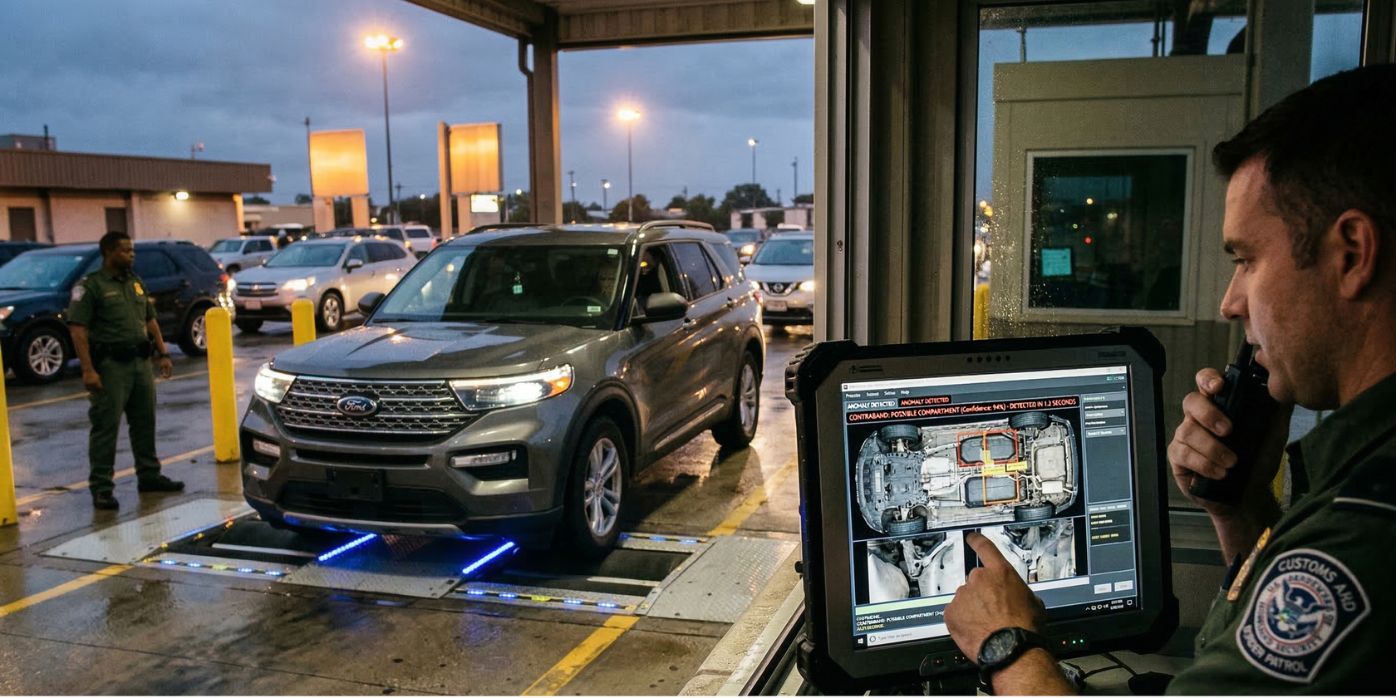
The Automatic under vehicle inspection system plays a key role in this transition by enabling drive-through scanning that captures high-resolution undercarriage images without requiring vehicles to stop. By combining advanced imaging with intelligent analytics, facilities can maintain consistent inspection standards even during peak traffic periods.
Automation also supports round-the-clock operations, ensuring that performance does not degrade during long shifts or high-demand situations.
Maintaining Continuous Traffic Flow
One of the biggest advantages of modern inspection platforms is their ability to maintain continuous vehicle flow. Instead of stopping each vehicle for manual checks, drive-over systems allow inspections to occur seamlessly as vehicles pass through designated lanes.
Key traffic benefits include:
- Reduced waiting times at entry gates
- Minimal vehicle idling and congestion
- Faster throughput during peak hours
- Improved visitor and driver experience
- Lower operational friction for logistics vehicles
These improvements are particularly important at UAE facilities that handle commercial freight or time-sensitive deliveries.
Improving Detection Accuracy Without Delays
Efficiency alone is not enough. Security teams must also ensure that faster processing does not compromise detection quality. Intelligent imaging and automated analysis help maintain high accuracy even at speed.
Modern systems enhance detection by:
- Capturing full-width undercarriage imagery
- Using AI-assisted anomaly detection
- Comparing scans with stored vehicle profiles
- Highlighting suspicious modifications instantly
- Supporting operator review with clear visuals
This layered approach ensures that potential threats are identified quickly while allowing normal traffic to proceed without unnecessary interruption.
Enhancing Operator Effectiveness
Human operators remain an essential part of the security ecosystem, but their role is evolving. Instead of performing every inspection manually, personnel now focus on reviewing alerts, validating anomalies, and managing exceptions.
Advanced platforms support operators through:
- User-friendly monitoring dashboards
- Automated alert prioritization
- Real-time visual feedback
- Centralized control interfaces
- Reduced cognitive workload
By minimizing repetitive manual tasks, facilities improve both operator performance and overall security reliability.
Integration with Smart Infrastructure
The UAE’s broader smart infrastructure initiatives are also influencing how vehicle screening systems are deployed. Modern facilities increasingly require security tools that integrate with wider digital ecosystems.
Advanced inspection platforms can connect with:
- Access control and gate automation
- License plate recognition systems
- Video management platforms
- Command and control centers
- Visitor management systems
This integration creates a unified security environment where vehicle data contributes to broader situational awareness and risk management.
Supporting Long-Term Operational Scalability
High-growth environments require solutions that can scale over time. Automated inspection technologies are designed to handle increasing traffic volumes without requiring proportional increases in manpower.
Scalability advantages include:
- Consistent performance during traffic growth
- Reduced dependency on manual labor
- Flexible lane deployment options
- Centralized monitoring capabilities
- Future-ready software upgrades
For UAE facilities planning long-term expansion, scalability is a critical factor in technology selection.
The Road Ahead for UAE Entry Point Security
As the UAE continues to expand its infrastructure and global connectivity, the pressure on vehicle entry points will only increase. Facilities that rely solely on traditional methods may struggle to keep pace with rising demand and evolving threat landscapes.
The future of perimeter security will focus on intelligent automation, real-time analytics, and seamless traffic management. Sites that invest in modern screening platforms position themselves to maintain both strong protection and operational efficiency.
Conclusion
Balancing security and traffic flow is no longer optional for UAE facilities—it is an operational necessity. High-traffic environments demand solutions that can inspect vehicles thoroughly while keeping movement smooth and predictable.
Through automation, intelligent imaging, and integrated security platforms, organizations across the UAE are achieving this balance more effectively than ever before. As vehicle volumes and security expectations continue to rise, technology-driven inspection will remain central to maintaining safe, efficient, and resilient entry points.