
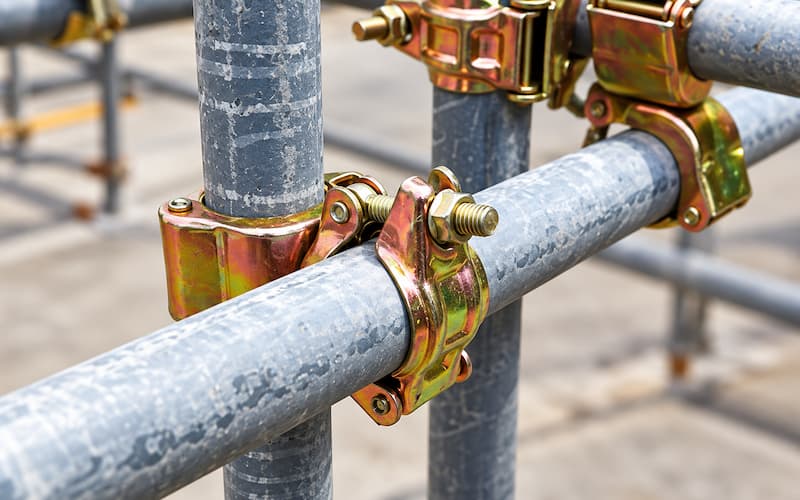
Scaffolding systems depend on properly selected components to provide stable working platforms and support temporary structures on construction sites. While scaffolding pipes form the basic framework, clamps and couplers are responsible for connecting, positioning, and securing the tubes. Choosing the wrong type can affect the stability, alignment, and overall performance of the scaffold.
For contractors and procurement teams sourcing scaffolding pipes and clamps Saudi Arabia, understanding the purpose of different clamp types is essential. The right selection depends on the scaffold configuration, connection angle, expected loads, working conditions, and project requirements.
From right-angle clamps used for standard structural connections to swivel clamps designed for angled arrangements, each type has a specific application. This guide explains the main types of scaffolding clamps, where they are commonly used, and what construction companies should check before purchasing them.
Why Scaffolding Clamp Selection Matters
Scaffolding clamps are not simply fastening accessories. They are important connection components that help maintain the geometry and stability of a tube-and-clamp scaffold.
A suitable clamp should match the pipe dimensions and intended connection. It should also be capable of handling the forces expected in the application and remain secure under normal site conditions.
Poor selection can result in:
-
Misaligned scaffold tubes
-
Unstable connections
-
Difficulty during assembly and dismantling
-
Premature component wear
-
Increased inspection and maintenance requirements
-
Greater project and safety risks
Contractors should therefore consider clamps as part of the overall scaffold design rather than treating them as interchangeable hardware.
What Are the Main Types of Scaffolding Clamps?
Different clamp configurations are available for different connections. The most common types include right-angle clamps, swivel clamps, sleeve couplers, putlog or single clamps, and specialized connection components.
The correct choice depends on the structural arrangement and intended use.
Right-Angle Scaffolding Clamps
Right-angle clamps, also known as double couplers in some applications, are designed to connect two scaffold tubes at approximately 90 degrees.
They are commonly used when creating:
-
Vertical and horizontal tube connections
-
Standard scaffold frames
-
Guardrails
-
Cross-bracing arrangements where a fixed-angle connection is required
-
Platform support structures
Because the connection is intended to remain at a fixed angle, these clamps are suitable for conventional tube-and-coupler scaffolding where tubes intersect perpendicularly.
Contractors should verify that the clamp is designed for the specific tube diameter and application before purchase.
Swivel Clamps
Swivel clamps allow two scaffold tubes to be connected at variable angles rather than being restricted to a fixed 90-degree arrangement.
They can be useful for:
-
Diagonal bracing
-
Irregular scaffold configurations
-
Complex temporary structures
-
Structures requiring angled tube connections
-
Certain strengthening and bracing arrangements
For example, a diagonal brace may not intersect another scaffold tube at exactly 90 degrees. A swivel connection provides the flexibility needed to position the brace correctly.
However, flexibility should not be confused with unrestricted suitability. The clamp still needs to be compatible with the scaffold design, tube size, and required loading conditions.
Sleeve Couplers
Sleeve couplers are used when two scaffold tubes need to be connected end-to-end to create a longer continuous tube.
They are particularly useful when:
-
Longer tube runs are required
-
Scaffold dimensions exceed standard tube lengths
-
Existing tubes need to be extended
-
Temporary structures require continuous members
A sleeve connection should provide a secure and properly aligned joint. Contractors should check the manufacturer’s specifications and ensure that the connection is appropriate for the intended structural application.
Putlog or Single Clamps
Single or putlog-style clamps are commonly associated with connections where a scaffold tube needs to be attached to another tube or supporting arrangement without creating the same type of full structural intersection as a double clamp.
Their application depends on the scaffold system and design requirements. Contractors should use these components only where the scaffold design specifically calls for them.
How Should Clamp Types Be Matched to Construction Applications?
Selecting the right clamp begins with understanding how the scaffold will be assembled and loaded.
Standard Scaffold Frameworks
For conventional scaffolding with vertical standards and horizontal ledgers meeting at right angles, fixed-angle clamps are commonly appropriate.
They help maintain consistent geometry throughout the scaffold structure.
Diagonal Bracing
Diagonal braces often require connections at angles that vary according to the scaffold configuration. Swivel clamps can provide the required angular flexibility where permitted by the design.
Bracing is particularly important for maintaining the stability of temporary structures, so connection selection should follow the engineered scaffold arrangement.
Extended Tube Runs
When scaffold tubes need to be joined longitudinally, sleeve couplers are generally more relevant than right-angle or swivel clamps.
The connection must maintain appropriate alignment and provide the required structural performance for the application.
Complex or Irregular Structures
Industrial facilities, infrastructure projects, maintenance work, and projects around existing structures may require scaffolding with unusual geometry.
In such cases, contractors may need a combination of fixed-angle and adjustable-angle connections. The selection should be based on the approved scaffold design rather than convenience during assembly.
What Should Contractors Check Before Buying Scaffolding Clamps?
Before procurement, construction companies should evaluate more than price and availability. A clamp that looks suitable may not be appropriate for a particular tube system or loading condition.
1. Tube Compatibility
Check the outside diameter and specifications of the scaffold pipes. The clamp must be designed to fit the pipe dimensions securely.
Using incompatible components can create connection problems and compromise the intended performance of the scaffold.
2. Clamp Type and Application
Identify exactly how the connection will be used.
Ask:
-
Is the connection fixed at 90 degrees?
-
Does the tube need to connect at an angle?
-
Are two tubes being joined end-to-end?
-
Is the connection part of a bracing system?
-
Is the component being used in a load-bearing arrangement?
These questions help procurement teams select the appropriate component instead of relying on generic scaffolding hardware.
3. Material and Corrosion Resistance
Construction sites can expose scaffold components to moisture, dust, chemicals, coastal environments, and frequent handling.
Depending on the application, buyers may consider factors such as:
-
Material composition
-
Surface treatment
-
Galvanizing or other protective finishes
-
Resistance to corrosion
-
Resistance to repeated site handling
For projects in demanding environments, corrosion protection can be particularly important for maintaining component condition during storage and use.
4. Manufacturing Quality
Clamps should be manufactured consistently so that they provide reliable connections when correctly installed.
Procurement teams should examine:
-
Dimensional consistency
-
Thread and bolt quality
-
Surface condition
-
Casting or forging quality, where applicable
-
Fastener condition
-
Manufacturer documentation
Quality management should extend to temporary construction equipment because defective connection components can introduce unnecessary project risks.
5. Technical Documentation
Reliable suppliers should be able to provide relevant product information. Depending on the component and project requirements, this may include specifications, dimensions, material information, load-related data, inspection documentation, or applicable conformity information.
Documentation helps engineers and procurement teams verify whether the product is suitable before it reaches the construction site.
How Do Project Conditions Affect Clamp Selection?
The construction environment can influence which scaffolding components are appropriate.
For example, a straightforward building project may use a conventional tube-and-clamp arrangement, while an industrial maintenance project may require more complex configurations around equipment, pipes, structures, and restricted access areas.
Other factors include:
-
Scaffold height and configuration
-
Working platform arrangement
-
Environmental exposure
-
Required bracing
-
Access requirements
-
Frequency of assembly and dismantling
-
Expected project duration
-
Storage and transportation conditions
The scaffold should be designed and erected according to applicable requirements, manufacturer instructions, and competent engineering or scaffolding practices.
Common Mistakes When Choosing Scaffolding Clamps
Several procurement and installation mistakes can create avoidable problems.
Choosing Based Only on Price
A low-cost clamp may not provide the required quality, compatibility, or documentation. Procurement decisions should consider suitability and total project requirements rather than purchase price alone.
Mixing Incompatible Components
Using pipes and clamps from different systems without confirming compatibility can create connection issues.
Using the Wrong Clamp for the Connection
A right-angle clamp should not automatically be substituted for a swivel connection simply because it is available. The connection geometry matters.
Ignoring Environmental Conditions
Components used outdoors or in corrosive environments may require appropriate protection and maintenance.
Failing to Inspect Components
Clamps should be inspected for visible damage, deformation, excessive corrosion, damaged threads, or other conditions that could affect their intended use.
How Can Companies Evaluate Suppliers of Scaffolding Pipes and Clamps Saudi Arabia?
Supplier evaluation is an important part of procurement, particularly for large construction and infrastructure projects.
Before placing an order, companies can assess suppliers based on:
-
Product range and availability
-
Compatibility with required scaffold pipe sizes
-
Manufacturing and quality information
-
Technical documentation
-
Delivery capability
-
Product traceability where required
-
Experience serving construction and industrial projects
-
Customer and technical support
-
Ability to meet project quantities and schedules
Procurement teams should also provide suppliers with clear specifications rather than requesting generic scaffolding components. This makes quotations easier to compare and reduces the possibility of receiving unsuitable products.
A Practical Decision-Making Checklist
Before approving a scaffolding clamp purchase, project teams can review the following:
-
What type of connection is required?
-
What pipe diameter and specifications are being used?
-
Is a fixed-angle or adjustable-angle connection required?
-
Will the clamp be used for structural support or another application?
-
Are the components compatible with the scaffold design?
-
What environmental conditions will they face?
-
Is corrosion protection required?
-
Are technical specifications available?
-
Does the supplier provide appropriate quality documentation?
-
Can the supplier meet the project’s quantity and delivery requirements?
This checklist can help engineering, procurement, and project management teams make more informed purchasing decisions.
Conclusion
The right scaffolding clamp depends on the connection, scaffold configuration, pipe dimensions, loading requirements, and site conditions. Right-angle clamps are generally suited to fixed perpendicular connections, while swivel clamps provide greater flexibility for angled arrangements. Sleeve couplers are used for joining tubes end-to-end, while other specialized components may be selected for particular scaffold configurations.
For companies sourcing scaffolding pipes and clamps Saudi Arabia, product compatibility, manufacturing quality, corrosion protection, technical documentation, supplier reliability, and project requirements should all be considered before purchase. A structured procurement process helps contractors obtain components that are appropriate for their intended application and supports safer, more efficient scaffold assembly.