
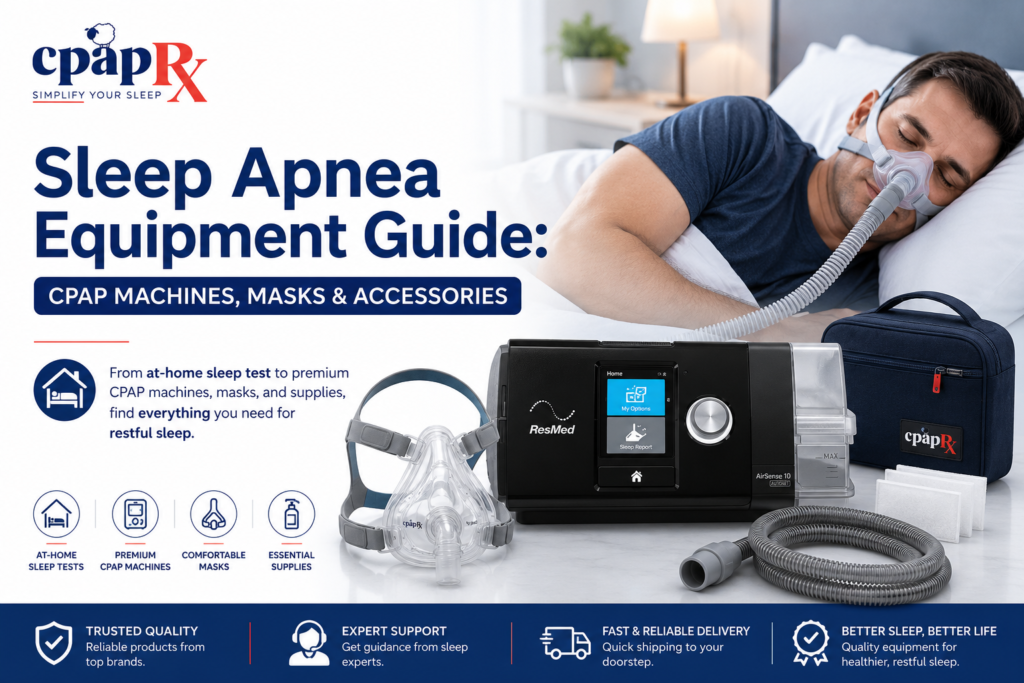
If you’ve been diagnosed with sleep apnea — or you suspect you might have it — the world of sleep apnea equipment can feel overwhelming fast. Machines, masks, tubing, humidifiers, filters… where do you even start?
This guide breaks down exactly what sleep apnea equipment does, what your options look like, and how to choose gear that actually fits your life instead of fighting against it every night.
What Counts as Sleep Apnea Equipment?
Sleep apnea equipment refers to the devices and accessories used to treat obstructive sleep apnea (OSA) through positive airway pressure therapy. The core categories are:
- CPAP machines – deliver a steady stream of pressurized air to keep your airway open
- CPAP masks – the interface between the machine and your airway (nasal, nasal pillow, or full-face)
- Tubing and hoses – carry air from the machine to the mask, sometimes heated for comfort
- Humidifiers – add moisture to prevent dryness in your throat and nasal passages
- Filters, cushions, and headgear – replaceable parts that keep your setup clean and comfortable
- Batteries and travel accessories – for CPAP use on the go, camping, or during power outages
Each piece plays a specific role, and getting the combination right is what separates people who stick with therapy from people who give up on it in week two.
Why Equipment Choice Matters More Than People Think
Sleep apnea is more common than most people realize. According to the American Academy of Sleep Medicine and Frost & Sullivan, an estimated 23.5 million American adults with obstructive sleep apnea remain undiagnosed. Of those who do get diagnosed and start therapy, a huge number stop using their equipment within the first few months — usually not because CPAP therapy doesn’t work, but because the equipment doesn’t work for them.
A mask that leaks, a machine that’s too loud, or tubing that twists every time you roll over isn’t just annoying — it’s often the reason people abandon treatment altogether. That’s why equipment selection isn’t a “figure it out later” decision. It’s central to whether therapy actually improves your sleep, your energy, and your long-term health.
CPAP Machines: The Core of Your Setup
Modern CPAP machines have come a long way from the bulky, noisy units of a decade ago. Today’s devices are quieter, smarter, and often track your sleep data automatically.
Popular options include machines like the AirSense 10 Elite, known for its auto-adjusting pressure and low noise output — a solid pick for people who are new to therapy or sensitive to sound. Comparisons like DreamStation vs. AirSense 10 are worth reviewing if you’re deciding between two of the most widely used machines on the market, since the right fit often comes down to pressure algorithms, app connectivity, and physical footprint on your nightstand.
Choosing the Right CPAP Mask
Mask selection is where most people get stuck — and honestly, it’s the equipment decision that matters most for comfort.
- Nasal pillow masks (like Solo Nasal Pillows or the AirFit P10) sit lightly at the base of your nostrils. Great for people who want minimal contact and don’t want anything covering their face.
- Nasal masks (like the AirFit F20) cover the nose only. A good middle ground for people who move around a lot in their sleep.
- Full-face masks (like the AirFit F30) cover both nose and mouth. Ideal for mouth breathers or anyone who needs higher pressure settings.
There’s no universal “best” mask — only the best mask for your face shape, sleep position, and breathing pattern. Many people go through more than one style before landing on the right fit, and that’s completely normal.
Keeping Your Equipment Running Right
Sleep apnea equipment only works as well as it’s maintained. A few things that make a real difference:
- Replace filters and cushions regularly — buildup reduces airflow efficiency and can irritate your skin
- Track battery life if you travel often or experience power outages, especially with backup CPAP batteries
- Watch for manufacturer recall notices — staying informed about equipment recalls, like past CPAP machine recalls, protects your health and your investment
- Clean tubing and water chambers weekly to prevent bacterial buildup
Skipping maintenance doesn’t just shorten equipment lifespan — it can undermine the entire point of therapy.
Equipment Alone Isn’t a Treatment Plan
Here’s something worth saying clearly: buying the “right” machine and mask is only part of managing sleep apnea well. Equipment works best as part of a broader plan that includes proper diagnosis, pressure calibration, and ongoing support from someone who understands your specific situation — not just a one-time purchase.
That’s the gap most equipment-only retailers leave open. You order a machine, and then you’re on your own to figure out fit, pressure settings, side effects, and troubleshooting.
How CPAP Rx Approaches Equipment Differently
At CPAP Rx, equipment is never sold in isolation. Every recommendation is paired with access to a sleep coach who helps you understand your options, troubleshoot fit issues, and build a routine you’ll actually stick with — because the best CPAP machine in the world doesn’t help if it ends up in a drawer after three weeks.
If you’re not sure where to start, take the Sleep Apnea Quiz or try the AHI Calculator to get a clearer picture of your situation before diving into equipment decisions.
Ready to find equipment that actually fits your life? Book a sleep coach consultation today and get guidance built around you — not just a product catalog.
FAQs
What is sleep apnea equipment used for?
It’s used to deliver continuous positive airway pressure (CPAP) therapy, which keeps your airway open during sleep to prevent breathing interruptions caused by obstructive sleep apnea.
How do I know which CPAP mask is right for me?
It depends on your sleep position, whether you breathe through your nose or mouth, and your comfort preferences. A sleep coach consultation can help narrow this down faster than trial and error alone.
How often should I replace CPAP equipment parts?
Filters typically need replacing every 1–2 months, cushions every 1–3 months, and tubing every 3–6 months, though this varies by usage and manufacturer guidance.
Can I use sleep apnea equipment while traveling?
Yes — many machines have travel-sized versions, and battery packs are available for use in areas without reliable power access.