
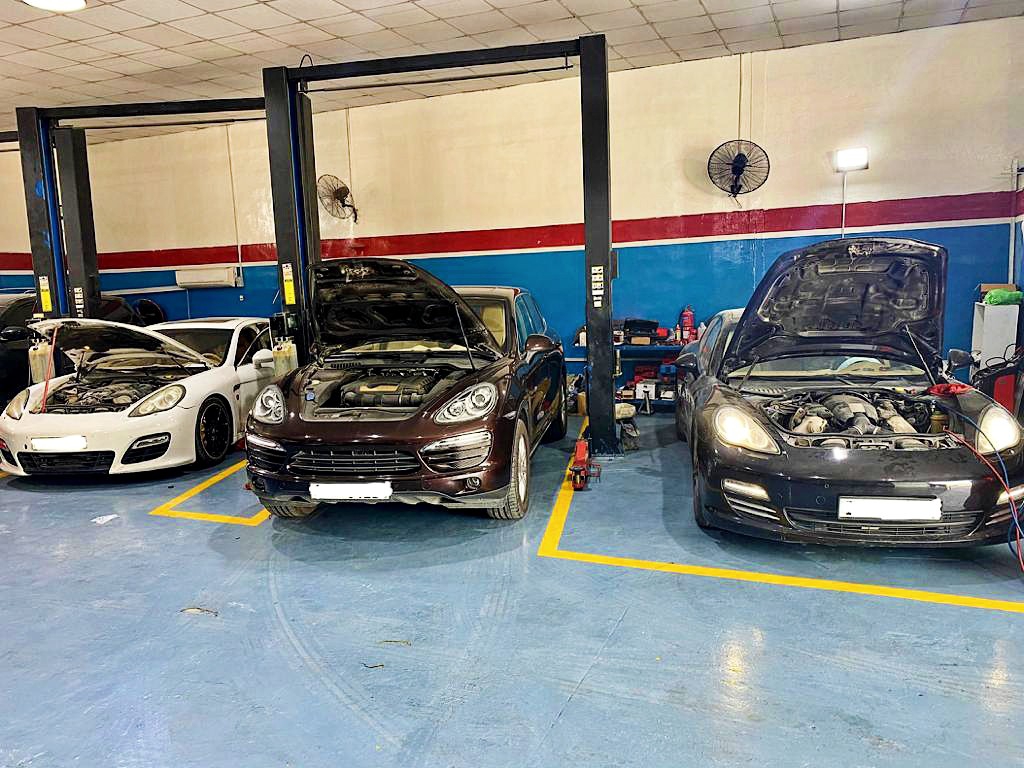
Your Porsche speaks a language — and unusual sounds are its way of asking for help. A rattle from the engine bay, a high-pitched whine, a grinding sensation through the pedals — each noise is a diagnostic clue. Before you schedule expensive repairs, understanding what your car is telling you matters enormously. In Dubai, where heat stress accelerates wear and driving conditions are demanding, listening carefully to your Porsche could save you thousands of dirhams and catch problems before they cascade into catastrophic failures.
Porsche engineering is precise. Modern 911s, Panameras, and Caymans have hundreds of sensors monitoring vibration, temperature, and mechanical stress. When something starts to wear, the car doesn’t hide it — it announces it through sound. The challenge is knowing what you’re hearing, and when it’s time to seek specialist Porsche repair services in Dubai with the diagnostics to pinpoint the root cause.
The Rattle: Engine Bay Clues
Rattling or Loose Metallic Sound
A sharp metallic rattle from inside the engine bay, especially noticeable on cold starts or light acceleration.
What it could be: Loose heat shields, exhaust manifold bolts coming undone, carbon buildup on the intake valves, or worn engine mounts. In older 911s with naturally aspirated engines, this is sometimes simply a loose alternator bracket. In turbocharged models, it can indicate failing turbine bearings.
Why it matters: Heat shields and loose bolts are harmless but annoying. Engine mount failure affects steering and handling precision — critical in a sports car. Turbo bearing wear is serious and progressive.
Medium Priority
If the rattle only happens on cold starts and disappears after a few seconds, it’s usually thermal expansion settling. If it persists or grows louder, don’t ignore it. A specialist performing Porsche repair in Dubai can use borescope inspection and thermal imaging to identify exactly where the sound is coming from — often revealing issues diagnostic scanners alone miss.
The Whine: Accessory Belt and Supercharger Signals
High-Pitched Whining Sound
A continuous high-pitched whine that changes pitch with engine RPM, often noticeable during acceleration or under load.
What it could be: Failing alternator, worn serpentine belt, power steering pump cavitation, or supercharger bearing wear (in Porsche Boxster S models). Sometimes it’s simply air intake resonance, which is normal.
Why it matters: A worn serpentine belt can snap suddenly, leaving you stranded. A failing alternator stops charging — you lose electrical power. Supercharger issues can result in catastrophic internal failure if unaddressed.
High Priority
Whining is easy to misdiagnose without proper tools. A borescope inspection of the serpentine belt, belt tension testing, and alternator output measurement differentiate between these causes. This is exactly where Porsche-specific diagnostics become essential.
The Grind: Brake and Transmission Warnings
Grinding, Scraping Sound Under Braking
A loud grinding or scraping noise when you apply the brakes, sometimes accompanied by vibration through the pedal.
What it could be: Brake pads worn to the backing plate, warped or damaged rotors, caliper seizing, or debris between the rotor and pad. In manual transmission models, grinding during gear shifts indicates synchro wear or damaged gear teeth.
Why it matters: Grinding brakes mean immediate stopping power loss. This is a safety issue. A seized caliper can cause brake failure on one corner. Transmission grinding, if ignored, leads to catastrophic transmission failure.
Critical — Stop Driving
Safety Warning
If you hear grinding when braking, do not drive the vehicle long distances. Have it inspected immediately at a qualified facility. Brake failure is not just expensive — it’s dangerous.
The Squeal: Belt and Brake Indicators
Squealing or High-Pitched Chirp
A sharp squealing sound that comes and goes, often worse in humid conditions or after the car sits overnight.
What it could be: Worn serpentine belt slipping, brake pad wear indicators (metal tabs designed to squeal), moisture-induced belt tension issues, or in some 911 models, the parking brake cable.
Why it matters: Squealing from the belt is a pre-failure warning. It tells you the belt has lost grip and will eventually slip or break. Brake pad squealing, while annoying, is sometimes intentional — the manufacturer added noise to alert you that pads are near their service limit.
Medium Priority
The Knock: Internal Engine Concerns
Knocking or Pinging Sound from Engine
A deep metallic knock from inside the engine, worse under hard acceleration or when using lower-octane fuel than recommended.
What it could be: Detonation (engine knock) from fuel octane mismatch, carbon buildup causing hot spots, failing knock sensors, ignition timing issues, or bearing wear (pre-ignition). In extreme cases, it indicates internal engine damage.
Why it matters: Occasional light knocking from poor fuel quality is annoying but not immediately dangerous. Continuous knocking indicates the engine is fighting against itself, creating stress on pistons and connecting rods. Left unaddressed, pre-ignition causes catastrophic engine failure.
High Priority
This is where real Porsche expertise is invaluable. Many independent shops will suggest an engine rebuild. A specialist with proper diagnostics (high-speed knock sensor analysis, fuel quality testing, ignition timing verification) often identifies the issue as something far simpler — and cheaper — to fix.
When to Seek Professional Help
In Dubai’s climate, heat amplifies small mechanical issues into big ones quickly. Any sound that’s new, gets louder over a few days, or is accompanied by warning lights deserves professional attention. Find a facility that offers:
✓Porsche-specific diagnostic equipment (not generic OBD-II scanners)
✓Trained technicians who understand Porsche architecture
✓Borescope and thermal imaging for visual inspection
✓OEM parts sourcing and warranty support
✓Road test and live data logging capabilities
Frequently Asked Questions
I hear a ticking sound from my Porsche 911 engine. Is this normal?
Mild ticking from a Porsche engine — especially on cold starts or at light throttle — is often completely normal. Porsche 911s, particularly air-cooled and early water-cooled models, have characteristic valve lifter noise that some owners describe as a “ticking.” However, if the ticking is new, gets louder under acceleration, or is accompanied by a loss of power, it could indicate valve train issues, carbon buildup, or bearing wear. The key is whether it’s consistent with how your car has always sounded. If it’s different, get it checked by someone with Porsche experience. They can often determine in seconds whether it’s normal or something to worry about.
My Porsche Cayman squeals when I turn the wheel hard or go through a tight turn. What’s happening?
That squealing is almost certainly the serpentine belt slipping under the high load of power steering operation. When you turn the wheel hard, power steering demands spike, and a worn or glazed belt loses grip on the pulleys and slips. This is a pre-failure warning. You have time to replace the belt before it breaks, but you shouldn’t wait weeks. A serpentine belt replacement on a Porsche is routine and relatively inexpensive (depending on model, AED 400-800 in Dubai). What you don’t want is for the belt to snap while you’re driving — that disables the alternator, power steering, and water pump simultaneously, leaving you without power steering at highway speed, which is dangerous.
I took my Porsche to a regular mechanic and they said there’s knocking in the engine. They suggested a full rebuild. Is that really necessary?
Before agreeing to an engine rebuild, get a second opinion from a Porsche specialist. “Knocking” can mean many things — some fixable with a simple fix, others requiring work. A shop without Porsche-specific diagnostics might hear knocking and jump to “engine damage” because that’s the conservative recommendation. A specialist can perform knock sensor diagnostics, check fuel quality, verify ignition timing, and often determine that the issue is carbon buildup (fixable with a fuel system cleaning), fuel octane mismatch (switch to premium), or a failing knock sensor (replace the sensor, AED 600-1,000). Engine rebuilds cost AED 15,000-25,000+. Before spending that, get proper diagnostics.
Grinding noise from my brakes. Is this an emergency, or can I drive a few more days?
Brake grinding is an emergency. Do not drive long distances. Grinding means either your brake pads are completely worn (metal backing plate scraping rotor) or a rotor is damaged. Either way, you’ve lost a significant portion of your friction material. Stopping power is compromised. In a Porsche, which depends on precise brake modulation, this becomes a safety issue fast. The cost difference between replacing just brake pads and rotors (AED 1,500-2,500) versus the damage caused by continued grinding (damaged calipers, scored rotors, brake fluid contamination) is enormous. Get it inspected immediately. Most Porsche specialists in Dubai can fit new pads and rotors same-day.
Thanks, servicesdictionary.com