
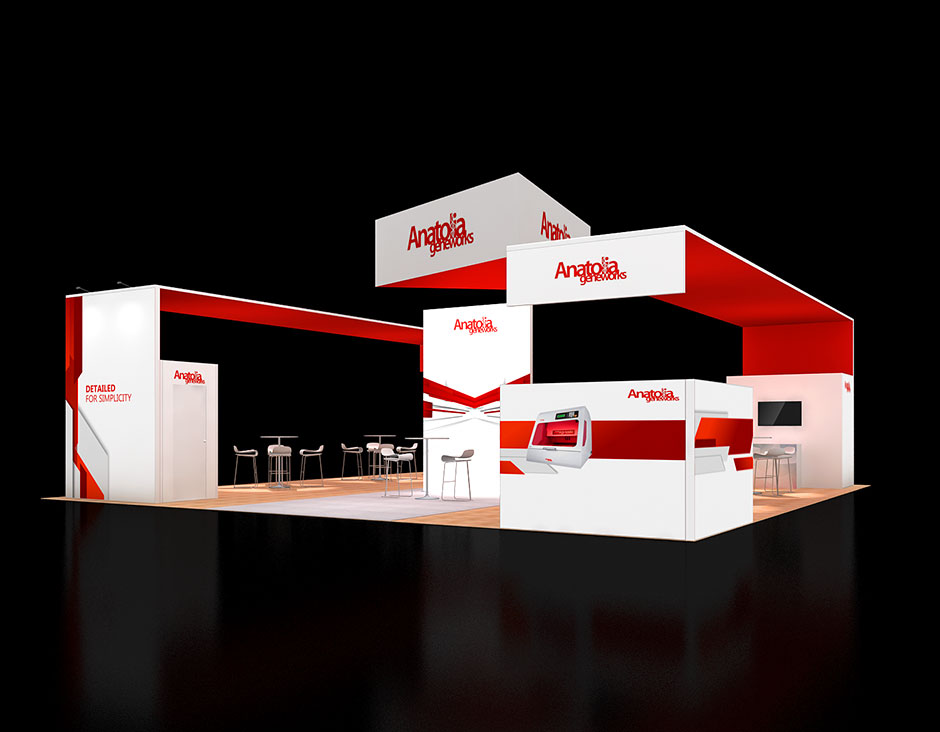
A 40×40 footprint is a serious investment. It’s one of the largest standard booth sizes at most major shows, and it comes with a price tag to match, in floor space, in design, in labor, and in freight. So it’s worth asking a question a lot of exhibitors avoid until after the show is over: is your 40 x 40 trade show booth actually generating leads, or is it just impressive to look at?
These aren’t always the same thing, and the gap between them is where a lot of exhibition budgets quietly go to waste.
Why Bigger Booths Are More Likely to Fall Into This Trap
Smaller booths have a built-in discipline. With limited space, every element has to justify itself, or it doesn’t fit. A 40×40 footprint removes that constraint entirely. Suddenly there’s room for a dramatic centerpiece, multiple lounge areas, elaborate lighting, maybe even a second level. All of it can look stunning in a rendering.
But size creates a specific risk: the bigger the booth, the easier it is to spend the entire budget on visual impact and leave little strategy for what actually converts a visitor into a lead. A crowd gathering to admire your 40×40 trade show displays is not the same thing as a crowd of qualified prospects handing over their contact information.
The Questions That Actually Matter
Before your next show, it’s worth auditing your booth against these questions rather than just admiring the design:
Does your booth make it obvious what you do within five seconds?
At scale, a large 40×40 booth design can become so visually dense that visitors are impressed but unclear on what you’re actually offering. If someone has to walk the entire perimeter before understanding your value proposition, you’ve likely lost them before they ever reach a staff member.
Is there a clear path from “interested” to “captured”?
A stunning centerpiece that draws a crowd is only valuable if there’s a defined next step, a demo station, a scan point, a conversation starter, that moves someone from admiring the space to engaging with your team. Without that path, foot traffic and lead generation are only loosely related.
Are your staff positioned to capture interest, or are they competing with the design for attention?
In some large booths, the architecture itself becomes the star, and staff end up standing in corners waiting for someone to approach. The booth should be working with your team, not instead of them.
Can you actually measure what’s converting and what isn’t?
If you can’t say which zone of the booth, which demo, or which conversation starter is producing the most qualified leads, you’re likely optimizing for the wrong thing next time, usually more visual impact instead of better conversion.
What “Impressive But Ineffective” Usually Looks Like
A few patterns show up repeatedly in large-footprint booths that look great but underperform on leads:
· One dominant visual feature and little else. A dramatic structure or media wall pulls people in, but there’s no clear next step once they’re standing in front of it.
· Too many competing focal points. With 1,600 square feet to fill, it’s tempting to build several “wow” moments. Visitors end up wandering rather than being guided toward a conversation.
· Open, undirected floor space. A large, open layout can look elegant, but without intentional pathways, visitors drift through without a natural point of engagement.
· Staff without a clear role in the space. If the physical layout doesn’t create natural conversation zones, even a well-trained team ends up reactive instead of proactive.
How to Design for Both Impact and Leads
The good news is that visual impact and lead generation aren’t actually in conflict. The strongest 40×40 trade show displays achieve both, but only when lead capture is designed in from the start rather than treated as an afterthought once the visual concept is locked.
Anchor your centerpiece to a conversion point, not just a photo opportunity. If you’re building a dramatic feature, put a demo, a product interaction, or a staff-led conversation right at that spot, so the same thing pulling people in visually is also where the qualifying conversation happens.
Build zones with clear purposes, not just open space. A large booth should feel intentional, not vast. Divide the footprint into a welcome area, a demo or product zone, and a private meeting space, similar to good practice on smaller footprints but scaled up. This gives visitors, and your staff, a clear sense of where to go and why.
Make the value proposition visible from a distance. With a footprint this large, your key message needs to be readable well before someone reaches the booth, not just discoverable once they’re inside it. Height and signage matter more here than on a smaller footprint.
Give every visitor an easy way to become a lead. Whether it’s a scan point, a short interactive demo, or simply a well-placed staff member ready to start a conversation, make sure there’s a low-friction way to capture interest at multiple points around the booth, not just at one central desk.
Renting Doesn’t Mean Compromising on Either Impact or Leads
If you’re evaluating a 40 x 40 trade show booth rental instead of a fully custom build, this same lead-generation discipline should apply. A rental system built around your brand can absolutely deliver visual impact at scale, while still being designed with clear conversion points from the start. The key is asking your rental provider directly how the layout supports lead capture, not just how it looks in renderings.
Questions worth asking before committing to a design:
· Where in this layout does a visitor naturally end up in a conversation with staff?
· How many distinct engagement points does this design create, not just visual focal points?
· Can the layout be adjusted after the first show if certain zones aren’t converting as expected?
Measuring After the Show
The only real way to know if your booth generated leads or just admiration is to track it. At minimum:
· Total leads captured versus total estimated foot traffic
· Which specific zone or feature each lead engaged with before converting
· How lead quality compares to previous shows at a similar or smaller footprint
If your lead numbers don’t reflect the investment in a 40×40 footprint, the issue is rarely the size itself. It’s usually that the design prioritized visual impact without building in a clear, repeatable path to conversion.
The Bottom Line
A large booth is not automatically a high-performing one. Whether you’re building custom or exploring a 40×40 trade show booth rental, the exhibitors who get real return from this footprint are the ones who design for both impression and conversion from day one, not the ones who simply have the most impressive structure on the floor. Before your next show, look past the renderings and ask honestly: is this booth built to be admired, or built to generate leads? The best ones do both, but only when that’s the actual design brief from the start.