

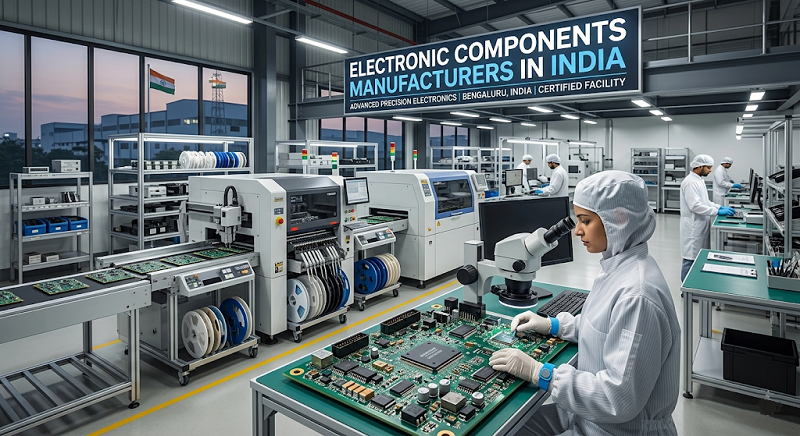
India’s electronics manufacturing sector has matured significantly over the past decade. The combination of government-backed production incentive schemes, a growing domestic market, and competitive manufacturing costs has attracted global OEMs and created a dense ecosystem of local suppliers. If you’re in the market for electronic components companies in India, the options are genuinely good — but the selection process requires more discipline than a price comparison.
Here’s a practical framework for evaluating Indian electronic component suppliers.
Start with Certification, Not Claims
ISO 9001 is a baseline. For electronics specifically, look for IATF 16949 if automotive usage is involved, and RoHS or REACH compliance for components going into consumer electronics or industrial equipment sold in Europe. Certifications tell you that a supplier has documented processes — but you still need to verify that those processes are actually followed on the shop floor.
Precision Stampings Capability Matters More Than Catalog
Many electronic components — terminals, contacts, shields, brackets, and connectors — are precision stampings. The tolerances are tight, the materials include phosphor bronze, beryllium copper, and brass, and the volumes can be extremely high. When evaluating a potential supplier, ask about their press tonnage range, the smallest and largest material thickness they stamp regularly, and how they validate first article samples. A supplier with real progressive die stamping capability and in-house tool room capacity is a fundamentally different option from one that outsources dies and does final stamping only.
Evaluate the Tool Room
India has a strong base of tool and die manufacturers, particularly in Maharashtra, Gujarat, Tamil Nadu, and Karnataka. Companies with in-house progressive die design and manufacturing capability can iterate faster, control tooling costs better, and respond to design changes without external lead time penalties. When you visit a supplier, the tool room condition tells you a great deal about their overall operational discipline.
Ask About Material Sourcing
Precision stampings for electronics require consistent-grade copper alloys and specialty steels. Ask your potential supplier where they source these materials, whether they stock certified material grades, and how they handle batch traceability. Suppliers who buy on spot markets without traceability documents introduce a quality risk that downstream inspection can’t always catch.
Understand Their Volume Experience
A supplier excellent at prototype quantities may struggle at 5 million pieces per month. Conversely, a high-volume house may not have the setup flexibility for a mixed program with short runs across multiple part numbers. Be specific about your actual volume requirements and ask for evidence — not estimates — of similar programs they’ve run.
Location and Logistics
Electronic components companies in India with facilities near ports (JNPT in Mumbai, Chennai, Mundra) have logistical advantages for export. Those near automotive or electronics clusters (Pune, Bangalore, Chennai, Noida) often have stronger supply chain integration with Tier 1s. Location affects lead times, freight costs, and response speed for tooling changes or quality issues.
Getting the right supplier isn’t just about the best price per piece. In precision stampings for electronics, the real cost drivers are tooling investment, scrap rates, rework frequency, and the time your own team spends managing quality issues remotely.
