

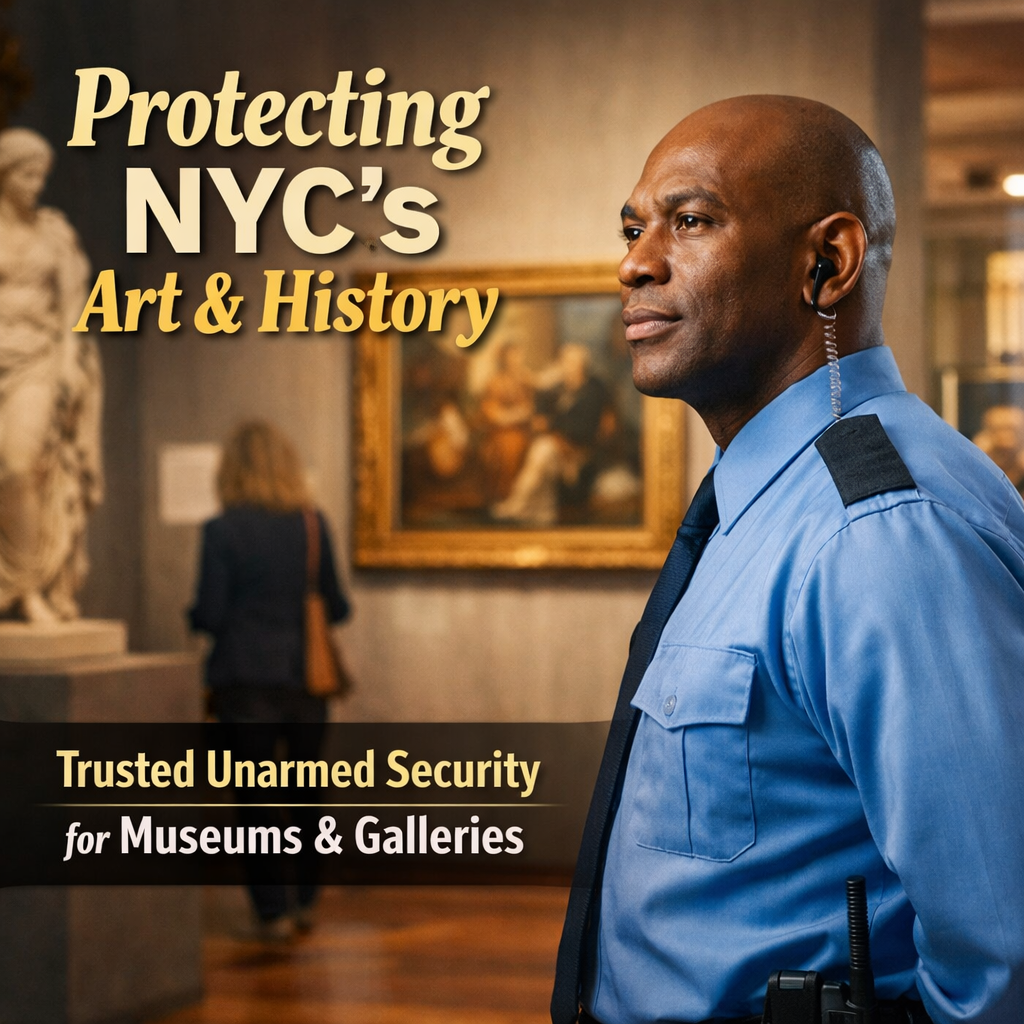
When you walk into a world-class museum or gallery in New York City, the last thing on your mind is security and that is exactly the point. The best protection blends seamlessly into the visitor experience. Today, more cultural institutions across the five boroughs are turning to unarmed security services in New York City providers to manage their unique safety needs. These venues require personnel who understand crowd dynamics, can de-escalate tense situations calmly, and protect priceless assets all without creating an intimidating environment that disrupts the cultural atmosphere guests come to enjoy.
Why Do Museums and Galleries Have Unique Security Needs?
Art institutions are not like retail stores or corporate offices. They host thousands of visitors weekly, manage irreplaceable collections, and operate in spaces designed to feel open and welcoming. Armed security in such environments can feel out of place even alarming to international tourists or school groups visiting on field trips.
That is why facility managers, curators, and operations directors at these venues are increasingly choosing trained unarmed personnel who bring a different kind of presence:
- Calm and professional appearance that aligns with the venue’s brand.
- Strong interpersonal skills for handling visitors of all backgrounds.
- Ability to manage entry points, bag checks, and crowd flow without confrontation.
- Quick response protocols for emergencies that involve coordination, not force.
- Familiarity with loss prevention techniques specific to art and artifact protection.
This shift is not about cutting corners, it is about matching the right security profile to the right environment.
What Do Unarmed Security Officers Actually Do in These Settings?
A lot of people assume that ‘unarmed’ means ‘untrained’. That assumption is wrong. The officers deployed by reputable unarmed guard services in New York City go through rigorous training that includes emergency response, first aid, conflict resolution, and situational awareness.
In a museum or gallery context, their day-to-day responsibilities typically include:
- Visitor screening at entry points using bag inspection and ticketing protocols.
- Gallery patrolling to monitor visitors’ proximity to exhibits and artworks.
- Event security during private openings, fundraisers, and late-night events.
- Emergency coordination, including evacuation procedures and communication with the NYPD.
- Deterrence simply by being a visible, professional presence throughout the space.
The goal is always to protect people and property while preserving the experience that makes these venues special.
Which Types of Venues Benefit Most?
New York City is home to hundreds of cultural institutions from massive anchor museums on Museum Mile to boutique contemporary art galleries in Chelsea and Tribeca. Across all of them, the demand for unarmed security services in New York City continues to grow.
Venues that particularly benefit include:
- Large public museums with high daily foot traffic and multiple entry points.
- Private art galleries host rotating exhibitions and high-value artwork.
- Historical society buildings that house archival collections and rare documents.
- Cultural centers serving diverse communities with multilingual visitor bases.
- Auction houses manage pre-sale exhibitions and on-site bidding events.
Each of these spaces has its own layout, visitor profile, and risk level which is why cookie-cutter security solutions rarely work here. Custom deployment strategies matter.
How Do Museums Choose the Right Security Partner?
This is where buyers do their real research. Decision-makers at cultural institutions are not just shopping for price. They are evaluating reliability, training standards, local knowledge, and reputation. Here are the key questions that guide their process:
Does the provider understand arts and cultural environments?
Generic security companies often lack experience with the nuances of gallery settings, noise levels, lighting, visitor volume patterns, or how to interact with donors versus tourists.
Are officers trained in de-escalation?
In a museum, an escalated conflict near an exhibit is a liability in more ways than one. Officers who can resolve situations verbally are far more valuable than those who default to confrontation.
Can staffing scale for events?
Opening nights, member previews, and traveling exhibitions can triple normal visitor counts overnight. A strong security partner has the roster depth to staff up without compromising quality.
Is licensing and insurance in order?
In New York, security providers must be licensed through the Department of State. Institutions that skip this check expose themselves to significant legal and reputational risk.
The Local NYC Advantage
Hiring a security provider with deep roots in New York City matters. Officers who know the boroughs, understand the transit patterns, and are familiar with city ordinances bring a layer of situational awareness you simply cannot train overnight. Local providers also tend to have faster response times, stronger relationships with local law enforcement, and a better understanding of the cultural and demographic diversity of NYC’s museum-going public.
For institutions based in Manhattan, Brooklyn, Queens, or the Bronx, local presence translates directly into better service quality.
Is Unarmed Security Really Enough for High-Value Collections?
This is one of the most common questions institutions ask when evaluating their options. The answer, for most museums and galleries, is yes when the security program is designed correctly.
Unarmed does not mean unprotected. It means that the first layer of defense relies on trained observation, strong communication, access control, and protocol-driven response. Most theft attempts and incidents at cultural venues are deterred long before they escalate. The presence of a professional officer who knows the space, monitors entry points, and remains alert throughout their shift is a proven deterrent in its own right.
Institutions that pair strong physical security staffing with CCTV systems, alarm infrastructure, and documented emergency protocols consistently report fewer incidents than those relying solely on technology.
What Should You Look for When Hiring?
If you are currently evaluating vendors or reconsidering your current security setup, here are the factors that matter most:
- Verified licensing under New York State Department of State regulations
- Documented training programs covering de-escalation, CPR/AED, and emergency response.
- Experience in cultural or institutional environments, not just retail or corporate.
- Communication protocols that keep your management team informed in real time.
- Flexibility to support both routine operations and special events without gaps in coverage.
Getting these answers upfront protects your institution, your collection, and your visitors.
Choosing the right unarmed security services provider in New York City for your museum or gallery is not just an operational decision, it is a statement about how seriously you take your responsibility to visitors, staff, and irreplaceable cultural assets. Work with a team that understands this world, has experience in it, and treats every shift like the collection depends on it because it does.