

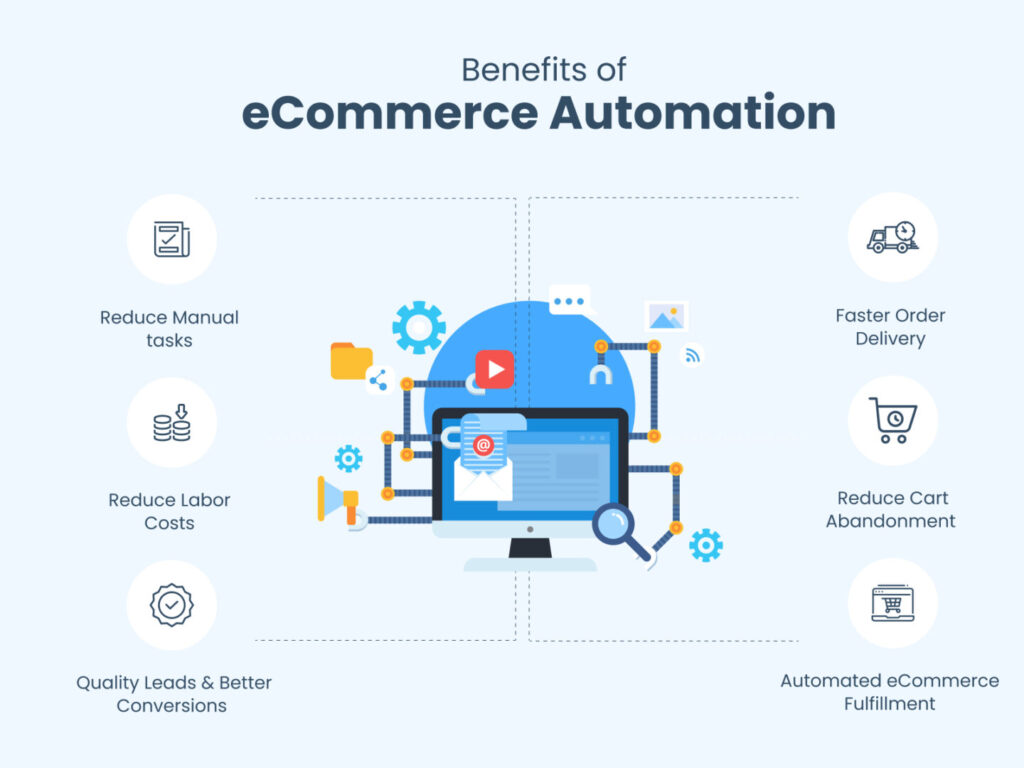
There’s a ceiling that almost every growing online seller hits. It doesn’t come from a lack of products, poor marketing, or even bad pricing. It comes from the sheer weight of doing the same things manually across too many places at once. You update a price on Amazon. Then eBay. Then Shopify. Then Walmart. By the time you’ve finished the round, something has changed again and a competitor has already moved. You’re not running a business at that point — you’re running maintenance. Ecommerce automation software exists specifically to break through that ceiling, and this article explains what it actually does, where it makes the biggest difference, and what to look for in a platform built to scale with you.
The Real Cost of Manual Operations
Most sellers don’t calculate how much time they lose to manual tasks until they try to expand. Managing 50 products across two channels is manageable by hand. Managing 200 products across Amazon’s 23 global marketplaces, six eBay country sites, and a Shopify store creates over 6,000 individual listings — each with its own pricing, stock level, and competitive environment.
At that scale, manual updates don’t just slow you down. They create errors. A stock number that isn’t updated after a sale on one channel leads to an oversell on another. A price that’s a few hours behind a competitor costs you the Buy Box. A supplier who updated their wholesale cost last night hasn’t been reflected in your listings until you check your email tomorrow morning. Each of these gaps costs money, and they compound quietly until the business stops growing and starts firefighting instead.
What Automation Actually Replaces
The word automation gets used loosely in ecommerce. It’s worth being specific about what well-built automation genuinely handles versus what it doesn’t.
Real automation handles pricing updates in real time — not batch-processed at the end of the day, but the moment a competitor moves or a supplier changes their cost. It handles inventory synchronisation across every connected channel the moment a sale is made, so oversells become structurally impossible rather than just unlikely. It handles supplier data — new stock, updated pricing, quantity changes — flowing directly into the seller’s listings without needing a manual step in between.
What automation doesn’t replace is judgment. Setting minimum prices, deciding which channels to prioritise, choosing which suppliers to work with — those decisions still belong to the seller. Good automation enforces those decisions consistently across thousands of listings at a speed no person can match.
Why Multichannel Complexity Breaks Traditional Tools
Individual channel dashboards — Amazon Seller Central, eBay Seller Hub, Shopify’s backend — were designed to manage that channel, not to coordinate across all of them. A seller running 23 Amazon marketplaces is technically running 23 separate dashboards. Add eBay and a standalone store and the number of places to log in, check, and update becomes a full-time job in itself before any actual selling has taken place.
This is where an ecommerce automation platform earns its place. Rather than logging into each platform separately, a unified system pulls every channel into one workspace. A single price update applies everywhere. A single inventory adjustment reflects across all connected marketplaces. The seller sees one accurate picture of the business rather than trying to assemble it from dozens of partial views.
The practical difference isn’t just time saved on updates. It’s the elimination of the information lag that causes errors. When a supplier adds new stock at 2am, a platform built for automation picks that up and lists the item across all connected channels immediately — without anyone having to be awake and watching for it.
Repricing at Speed: Where Most Sellers Lose Ground
The Buy Box on Amazon is won and lost in minutes, not hours. More than 80 percent of Amazon sales go through the Buy Box, and the sellers who stay in it consistently aren’t doing it by checking prices manually twice a day. They’re using automated repricing that tracks competitor positions in real time and adjusts within seller-defined rules to stay competitive without sacrificing margin.
The same logic applies across eBay and other price-sensitive marketplaces. A listing that’s ten pence cheaper than the next seller wins the click. A listing that was ten pence cheaper three hours ago and hasn’t been updated since has likely already lost it. The pace of competition on modern marketplaces assumes automation. Sellers who operate manually are working at a structural disadvantage that no amount of good product selection fully compensates for.
Supplier Integration Changes the Game
One of the least-discussed advantages of serious automation platforms is what they do with supplier data. Most sellers manage supplier relationships through email threads and spreadsheets — a method that introduces a consistent lag between what the supplier knows and what the seller’s listings reflect.
When supplier inventory and pricing feed directly into the platform, that lag disappears. Stock updates happen automatically. Cost changes trigger repricing rules without anyone having to read an email, open a spreadsheet, and work through the implications manually. Suppliers can even compete within the platform to offer the best cost for a given item, with the system selecting and applying the optimal option. That kind of integration isn’t a minor efficiency gain — it changes the fundamental speed at which a business can react to the market.
The Bottom Line
Scaling an ecommerce operation without automation means scaling the manual work at the same rate as the revenue. That’s not a growth model — it’s a staffing problem waiting to happen. The businesses that scale cleanly are the ones that build automation into the process early, so that adding channels, products, and suppliers adds capability rather than complexity.
MySellingHub is a unified ecommerce automation platform that connects Amazon, eBay, Walmart, Shopify, and 20+ global sales channels into a single dashboard — with real-time repricing, inventory sync, and direct supplier integration built in.
