

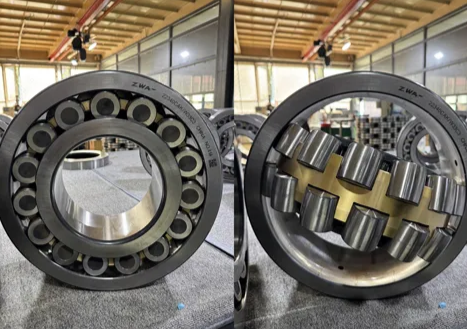
It remains clear in my mind – the year was 2014, the place Pune, where machines hummed beneath sharp overhead lighting. Spread out on a heavy cloth sat parts of a massive gearbox, each piece speaking louder than words. Because of one failed component, production had halted completely, three entire days lost despite the high cost of delay. Deep marks appeared inside the tapered roller bearings – dents carved by stress, discoloration from heat, fine cracks branching unpredictably outward. A furrowed brow settled on the procurement lead – figures lined up, documents aligned without flaw. Still, amid the blackened metal, reality showed clear: surface treatment had failed, material too soft beneath where force would strike.
A flash of understanding lit up the moment. Heavy machinery relies on more than just shape when choosing steel components. Tracking down a reliable producer of Tapered Roller Bearings – local or abroad – goes past checking dimensions alone. Hidden details hold weight instead: consistency in cooling, depth of testing, accuracy across production runs. Truth surfaces well before packaging, hidden deep within process shadows.
Why Heat Treatment Is the “Soul” of the Bearing
Let’s face it, a bearing is nothing but a bunch of steel pieces until it endures the fire. I mean, think about it, anyone with a lathe can trim a piece of steel into a cone or a roller. But to be able to support thousands of Newtons of force while rotating at high RPMs? That is what the furnace grants you.
Case-Hardening Defense
Usually, top-tier parts rely on case-carburized steel. Hardened surfaces come from this process – yet the inside stays tough and stretchable. What matters is how the outer layer resists wear without sacrificing inner flexibility.
- Facing heavy hits, it holds firm. That means cracks won’t start here when force strikes.
- Picture this. A manufacturer skips part of the heat treatment – say, reducing how long parts stay heated – to save on energy costs. What happens next might surprise you. The bearing looks flawless when viewed up close, crystal clear under magnification. Yet once it faces real stress? Snap. It fractures as if made of windowpane. Strength hides beneath appearance, until pressure reveals the truth.
Through-Hardening: The Alternative
Through-hardening (carbon-chromium steel) is frequent for smaller or less impact-heavy usages. It is uniform and hard over the entire cross-section. However, even in this case, a quenching process that is not precisely controlled will result in internal stresses causing “spalling”, metal will start to flake off from the raceway. It’s quite a disaster, really.
Technical Pillars: What to Ask for from Your Manufacturer
You can be more detailed before you sign a contract. People usually avoid the technical audit just because “a bearing is a bearing, ” but this is exactly where the risks lie. You have to wear an engineer’s hat, or at least be very close to somebody who does.
1. Raw Material Purity (The “Input” Problem)
Sometimes, I think we forget that heat treatment is not a magic wand that can turn bad steel into good steel. If the raw material contains “inclusions” (these are tiny non-metallic impurities trapped inside the metal), these will become the points where cracks appear during the heating phase.
- Smart Tip: Inquire with your manufacturer about the source of their steel. Are they utilizing “clean” degassed steel?
2. Controlled Atmosphere Furnaces
Manufacturing nowadays is very high-tech. So, if a Tapered Roller Bearing Supplier is hanging on to open-hearth furnaces, in which oxygen enters and causes decarburization (softening of the surface) you will run away from them. You want to see:
- Fully automated quenching cycles: This guarantees that each batch is cooled at the exact same rate.
- Live monitoring: Are they capable of showing you the “heat chart” for the specific batch that you are buying?.
Quality Control: Beyond the Visual Inspection
To be honest, selecting a Tapered Roller Bearing Manufacturer in India is almost like looking for a needle in the haystack in a very competitive market. Everyone claims to have “world-class quality, ” but what does that actually look like on the shop floor?
Why Non Destructive Testing Matters
Just looking won’t reveal a hidden crack below the surface. To catch it, a top maker must include:
- Sound waves travel through metal. Where gaps hide inside, echoes change. This reveals hidden spaces within solid parts.
- Using magnets to spot tiny cracks you cannot see. Tiny bits gather where flaws hide. A light shows hidden breaks clearly now.
- Eddy current testing shows if heat treatment reached deep enough. Whether the material got treated fully depends on this scan. Heat depth matters a lot – this method spots shallow runs. Not every test finds it; eddy currents catch changes others miss. When results come back off, chances are the heating didn’t go far enough.
Metrology and Dimensional Accuracy
We are now dealing with very small dimensions. The functioning of a tapered roller bearing depends on the roller “angle” being perfectly matched with the “angle” of the race. Should the manufacturer’s grinding machines be dated (from the 1980s), then your “taper” could be more of a “suggestion” than a strict mathematical definition.
Pro Tip: It is quite a plus if the company has their own lab accredited by NABL or a similar international organization. If it turns out that they only send a sample to the third party once every six months, they are not really controlling their process, they are merely hoping that it will go well.
The “Cheap” Trap: Why Prices “Low” Are Actually High
The Indian market is flooded with small and unorganized players. Besides the obvious big brands like SKF, Timken, or NBC, you will certainly find some deals 20% or 30% off the price. We all want to save money, right? But in the bearing industry, “cheap” is usually the biggest and most costly blunder you can make.
Where Corners Get Cut?
Less time heating means less power used – yet the metal stays softer than before. What happens next depends on how that softness affects later steps.
- Hardened steel stays fragile if not tempered afterward. Without that step, bearings might crack without warning. Sudden breakage becomes a real risk when tempering is left out.
- Footsore metal steps in for fresh-melted stuff, pulled straight from old beams and crushed cars instead of shiny new blends. Recycled chunks replace pristinely crafted mixes right at the start.
A few rupees saved grow into something much larger. Avoid spending five thousand on a bearing, alright. But when it seizes without warning at night, everything shifts – time adds up, production stops, more components fail. The price shows up as half a million lost. That silent piece inside the equipment, forgotten until now, starts shouting numbers after dark.
Find a partner not just a vendor
Years down the line, bearings still need to turn smoothly. That is why picking a supplier calls for patience, not speed. Look beyond today’s price tag. What matters grows clearer over time, like trust built slowly. A good choice stays useful far longer than expected.
1. R&D and Customization
Is the company experimenting with new stuff, or just mass-producing parts from the stock of an old era? The world is moving toward Electric Vehicles (EVs) and high-speed rail, which require bearings that can handle different heat profiles and friction levels. A manufacturer investing in R&D is a manufacturer that will be around to support you in five years.
2. Supply Chain Robustness
Steel prices are known to be very volatile. The best companies have “backward integration”, i.e., they maybe have the forging or smelting capability of their own, which can shield you from sudden price waves.
3. After-Sales and Installation Support
Sometimes I have seen a perfect set of good bearings getting spoiled because the installation crew didn’t use a proper hydraulic press but a sledgehammer. On a good supplier side, you may come across:
- On-site training of your maintenance team.
- Clear warranty terms that don’t feel like solving a puzzle.
- Easy access to the technical data sheets.
Certification: The Paper That Guarantees Performance
In India, certificates are not just an unnecessary administrative hassle; they represent a commitment from a third party.
- ISO 9001:2015: The first and most baseline standard for quality management.
- IATF 16949: In case you work in the automotive sector, you cannot avoid this one. It is a more complex standard than the ordinary ISO.
- ISO 14001: Represents that they are environmentally friendly, which most of the time means a cleaner and better-organized (thus more efficient) factory floor.
There are red flags if you have to rummage through strange menus on their website in order to find these. The proud manufacturer will make his credentials visible and easy to spot.
Building an AI-Ready Maintenance Strategy
Wait, why am I talking about AI in a bearing guide? Because the “Cost vs. ROI” of bearing maintenance is changing. Modern factories are using AI-powered vibration sensors to predict when a bearing is going to fail before it actually happens.
When choosing your Tapered Roller Bearing Manufacturer, ask if they provide “Smart Bearings” or if they have data sets that can integrate into your predictive maintenance software. It’s about moving from “fixing things when they break” to “acting on facts”. This shift can increase your profit growth potential by up to 16% by reducing unplanned downtime.
Conclusion
Here is the very last piece of advice that you can actually first hand practice: The Indian bearing market is extremely diverse. You have world-class manufacturing plants located right next to workshops, which are cutting all the corners imaginable.
It’s your duty to stick to standards that you can check.
- Investigate the quality of heat treatment: Does it run automatically? Is it recorded?
- Authenticate the steel: Do you know its origins? Is it degassed?
- Check the support: Will they be there if the machine breaks down?.
Don’t be tempted by a slight difference in price to compromise the very basis of your equipment. I feel it’s a bit melodramatic, but the productive capacity of your entire line is dependent on the precision of the bearings that you are selecting at this point in time.
As a matter of fact, at the end of the day, you just want to have a good sleep knowing that your machines have been running smoothly all along. The appropriate Tapered Roller Bearing Manufacturer is the one who is as much into the “hidden” science as you are into the bottom line.