
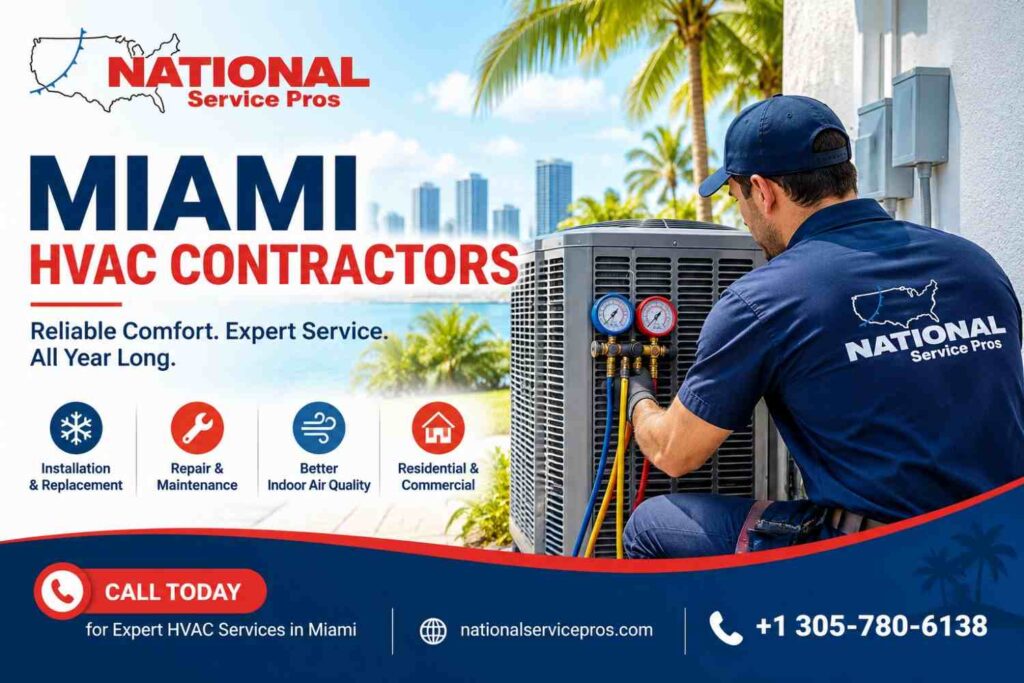
Choosing the right HVAC contractor helps you maintain a comfortable home, control energy costs, and keep your air conditioning system running efficiently. In Miami, where hot temperatures and high humidity place extra demands on cooling equipment, homeowners need dependable professionals who understand local climate conditions. A qualified contractor can help you select the right system, identify potential problems, and maintain consistent indoor comfort throughout the year.
When Comparing Miami HVAC Contractors, consider their licensing, experience, service options, equipment recommendations, and warranty coverage. These factors can help you make an informed decision and avoid unnecessary expenses.
1. Verify Licensing and Insurance
Before hiring an HVAC contractor, confirm that the company holds the appropriate Florida license for the work it performs. Proper licensing demonstrates that the contractor meets applicable professional requirements and understands relevant regulations.
You should also verify that the company carries appropriate insurance. General liability insurance can help protect you against certain property-related risks, while workers’ compensation coverage can help address workplace injuries involving employees.
Ask the contractor for proof of licensing and insurance before scheduling major work. Taking this step can help you avoid unqualified providers and reduce potential complications during an installation or repair.
2. Look for Relevant Experience in Miami
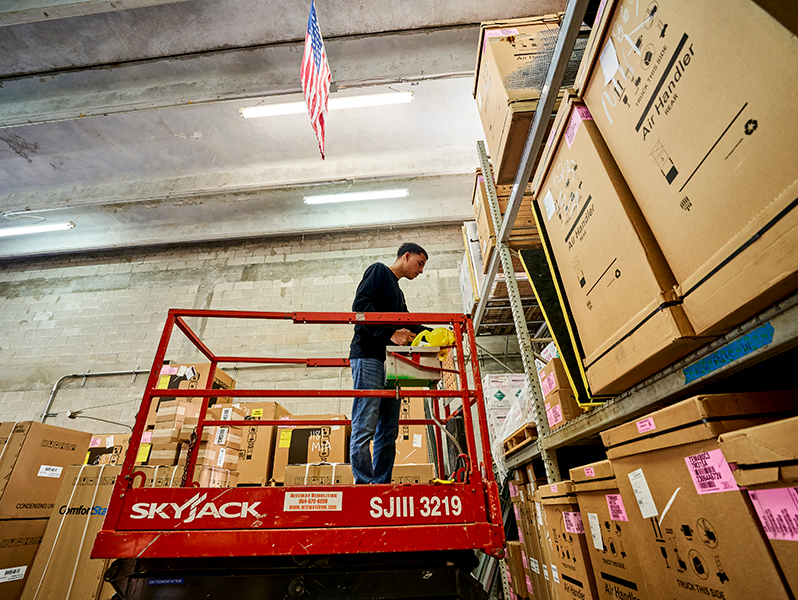
Miami’s warm, humid climate creates specific challenges for residential HVAC systems. Air conditioners often operate for extended periods, and excessive humidity can affect indoor comfort even when the temperature seems reasonable.
Look for contractors who understand these local conditions and have experience working with homes similar to yours. An experienced professional can evaluate cooling requirements, airflow, insulation, ductwork, and moisture control before recommending a solution.
National Service Pros has provided HVAC installation services since 2007 and serves residential and commercial customers. When evaluating any contractor, ask about its experience with your particular system, the complexity of your project, and similar properties in South Florida.
3. Compare Services and Technical Expertise
Different HVAC problems require different levels of expertise. Some homeowners need a straightforward repair, while others need a complete system replacement, new ductwork, or an installation for a newly constructed home.
Before choosing a contractor, check whether the company offers the services you need, such as:
- Air conditioning installation and replacement
- HVAC system inspections and troubleshooting
- Preventive maintenance
- Ductwork installation and related services
- Residential and commercial HVAC solutions
Choosing a contractor with relevant technical capabilities can make it easier to coordinate your project. Ask how the company diagnoses problems, explains available options, and determines whether repair or replacement offers better long-term value.
4. Choose the Right HVAC System for Your Home
The best HVAC system depends on more than your home’s square footage. Ceiling height, window placement, insulation, air leakage, occupancy, and local weather conditions can all influence cooling requirements.
A reputable contractor should evaluate these factors before recommending equipment. Avoid choosing a system based solely on price or assuming that a larger unit will provide better comfort.
An oversized air conditioner may cool a room quickly but cycle off before removing enough moisture. An undersized unit may struggle to maintain the desired temperature during periods of extreme heat.
Ask the contractor to explain the system’s capacity, efficiency rating, expected operating costs, and suitability for your home. A proper load calculation helps the contractor select equipment that balances comfort, humidity control, and energy use.
5. Compare Written Estimates and Pricing
Request written estimates from multiple Miami HVAC Contractors before committing to a major project. Comparing detailed proposals helps you understand what each contractor includes and whether the prices reflect similar work.
A comprehensive estimate should identify the equipment, labor, installation requirements, permits where applicable, and any additional charges. It should also explain whether the proposal includes ductwork modifications, thermostat upgrades, equipment removal, and system testing.
Do not automatically select the lowest bid. A substantially lower price may exclude essential services or specify equipment that does not meet your needs. Instead, compare the complete scope of work, the proposed system, the contractor’s qualifications, and the terms of the agreement.
6. Review Equipment Brands, Efficiency, and Warranties
HVAC equipment affects both your initial investment and long-term operating costs. Ask contractors to explain the differences between the systems they recommend, including energy efficiency, expected maintenance needs, and manufacturer support.
National Service Pros identifies Trane, Carrier, Bryant, Rheem, Ruud, and Goodman among the manufacturers it works with. When comparing equipment, confirm the availability of your preferred model and whether it suits your home’s cooling requirements.
Review warranty details carefully. Manufacturer warranties may cover eligible parts for a specified period, while labor coverage depends on the contractor’s written terms. Ask whether registration is required, what exclusions apply, and who handles warranty claims.
If you plan to finance a new installation, review the interest rate, repayment period, fees, and total cost before signing an agreement.
7. Evaluate Communication and Customer Support
Clear communication can make an HVAC project easier to manage. A reliable contractor should answer questions, explain technical details in understandable language, and provide realistic expectations about scheduling and project completion.
Before hiring a company, ask who will handle your appointment, how the team communicates delays, and whom you should contact if a problem occurs after installation.
National Service Pros emphasizes access to a live representative who can answer questions and help customers schedule service. When comparing contractors, consider how effectively each company responds to your concerns and explains the next steps.
You can also review customer feedback to identify recurring comments about punctuality, workmanship, communication, and follow-up service. Consider the overall pattern rather than relying on one review.
8. Ask About Maintenance After Installation
Regular maintenance helps HVAC systems operate efficiently and allows technicians to identify developing issues before they become more expensive problems. In Miami, frequent air conditioner use makes routine inspections especially important.
Ask whether the contractor offers maintenance visits that include checking electrical components, inspecting condensate drainage, evaluating refrigerant performance when appropriate, and checking airflow. Homeowners should also replace or clean air filters according to the manufacturer’s recommendations.
A clear maintenance plan can help protect equipment performance, support indoor comfort, and reduce the likelihood of unexpected breakdowns.
Conclusion
Choosing the best Miami HVAC Contractors requires careful research, clear comparisons, and an understanding of your home’s cooling needs. Verify licensing and insurance, evaluate local experience, compare written estimates, and review equipment recommendations and warranty terms before making a decision.
At National Service Pros, homeowners can explore HVAC installation, repair, and preventive maintenance services for residential and commercial properties. Taking time to evaluate your options can help you choose a contractor who supports reliable cooling, energy efficiency, and lasting home comfort.