
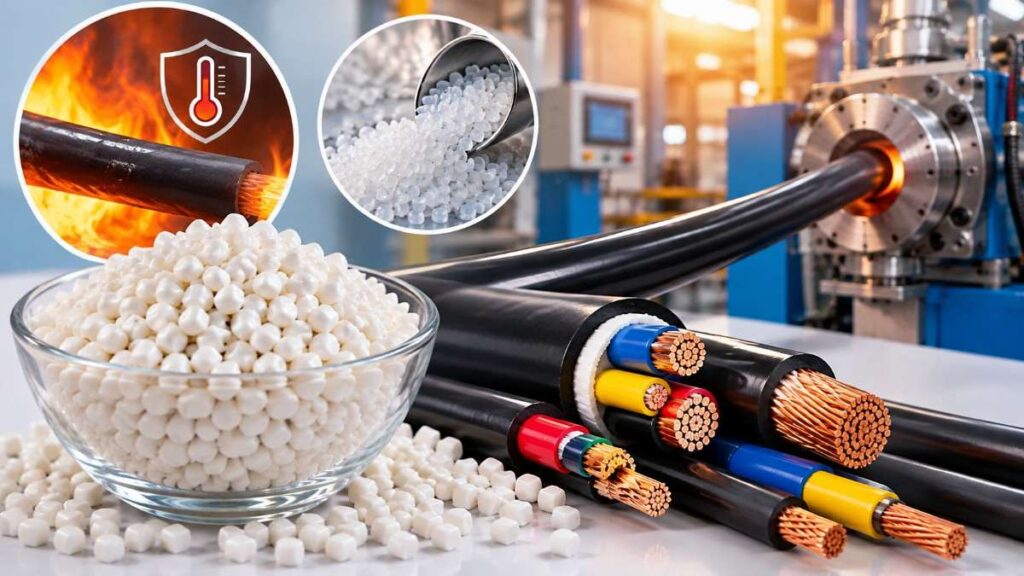
Cable manufacturing requires materials that can maintain their performance during processing and throughout long-term use. PVC is widely used for cable insulation and sheathing because it offers flexibility, durability, and good electrical protection. However, PVC can degrade when exposed to the high temperatures used during processing. Heat Stabilizers for Cables help control this problem by improving the thermal stability of PVC and supporting better-quality cable production.
Improving Thermal Stability During PVC Processing
PVC processing involves high temperatures that can cause the material to break down if it is not properly stabilized. Heat stabilizers help reduce thermal degradation during extrusion and other manufacturing stages. They allow PVC compounds to withstand processing temperatures for longer periods without significant discoloration or loss of important properties.
This is especially useful for cable manufacturers that need consistent production quality. Proper stabilization can help maintain the appearance, flexibility, and physical strength of the PVC compound while it passes through processing equipment. It also supports smoother production by reducing material degradation caused by excessive heat.
Protecting Cable Insulation and Sheathing
Cable insulation and outer sheathing need to remain stable under different operating conditions. Heat stabilizers help PVC retain its useful properties when cables are exposed to heat during service. This can be important in electrical, industrial, automotive, construction, and other applications where cables may experience elevated temperatures.
The right stabilizer system can help improve the durability of PVC insulation and sheathing. It supports resistance to heat-related damage and helps maintain the material’s mechanical performance. As a result, manufacturers can produce cables that are better suited to demanding applications and longer service requirements.
Supporting Better Electrical Cable Performance
The quality of cable insulation directly affects the overall performance and safety of an electrical cable. If PVC insulation becomes damaged because of heat, its protective properties can gradually decline. Heat stabilizers help reduce thermal degradation and support the stability of the insulating material.
By keeping the PVC compound more stable during processing and use, stabilizers contribute to reliable insulation performance. They can also help manufacturers achieve consistent physical properties across production batches. This consistency is important when cables are produced in large quantities for electrical systems, appliances, control equipment, and infrastructure projects.
Reducing Discoloration and Material Degradation
One visible sign of PVC thermal degradation is discoloration. Excessive heat during processing can cause PVC to change color and may also affect its physical properties. Heat stabilizers help control the chemical reactions responsible for thermal degradation, making it easier to maintain the desired appearance of the finished cable.
Color stability is particularly important for cables that require specific identification through different insulation or sheath colors. Consistent stabilization can help manufacturers maintain a uniform appearance while minimizing heat-related changes during production. It also helps reduce material waste caused by degraded or visually inconsistent PVC compounds.
Improving Processing Efficiency
Cable manufacturing depends on continuous and controlled processing. Unstable PVC compounds can create production difficulties, including discoloration, deposits, inconsistent extrusion, and changes in material properties. Heat stabilizers help improve the processing behavior of PVC by providing better protection against thermal stress.
When the stabilizer system is correctly selected and balanced with other additives, manufacturers can achieve more predictable extrusion performance. This can support smoother production and help reduce interruptions caused by material instability. Better processing control may also contribute to improved product consistency and more efficient use of raw materials.
Extending the Service Life of PVC Cables
Cables may remain in service for many years, so their insulation and sheathing must withstand environmental and operating conditions. Heat exposure is one factor that can contribute to gradual material deterioration. Stabilizers help protect PVC against heat-related degradation, supporting the long-term performance of cable components.
The effectiveness of a stabilizer depends on several factors, including the PVC formulation, processing temperature, cable design, and intended application. Manufacturers therefore need to select a suitable stabilizer system rather than using the same formulation for every cable type.
Choosing Suitable Heat Stabilizers for Cables
Selecting an appropriate stabilizer requires attention to the cable’s application and manufacturing conditions. Factors such as processing temperature, required flexibility, color requirements, electrical performance, and expected operating environment should be considered before finalizing a formulation.
Manufacturers also need to consider compatibility between the stabilizer and other additives used in PVC compounds. A well-balanced formulation can provide better thermal protection without negatively affecting the desired characteristics of the finished cable.
Companies such as Ala Polystabs provide stabilizer solutions for PVC applications, helping manufacturers consider suitable options based on their specific material and processing requirements.
Conclusion
Heat stabilizers play an important role in modern PVC cable manufacturing. They help protect PVC from thermal degradation during processing, support insulation and sheathing performance, reduce discoloration, and contribute to more consistent production. The correct stabilizer system can also support the durability and service life of finished cables.
As cable applications continue to expand across electrical, industrial, construction, and other sectors, reliable PVC formulations remain important. Understanding the role of heat stabilizers allows manufacturers to make better material choices and develop cables that meet the performance requirements of their intended applications.
Read More – https://alapolystabs.com/how-to-select-the-right-heat-stabilizer-for-footwear-applications.html