

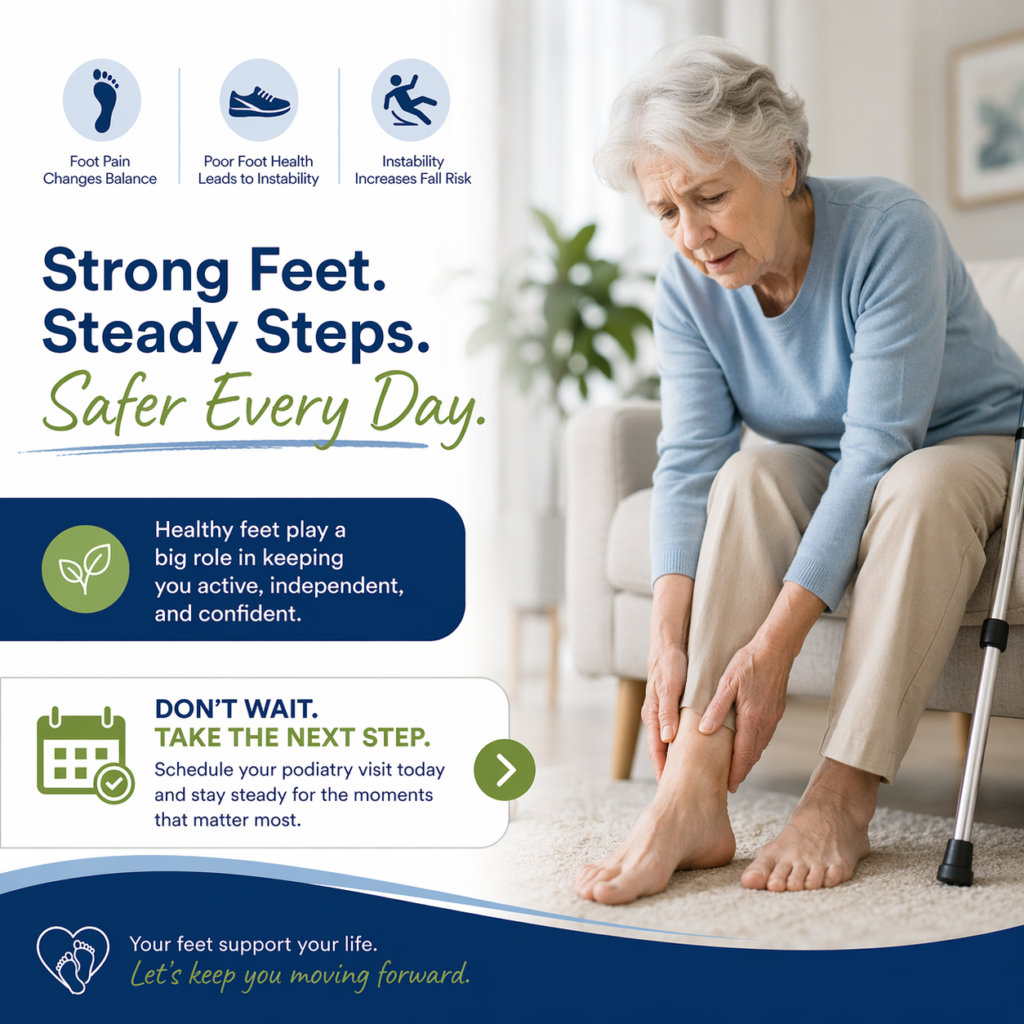
Every year, thousands of older adults in the West Hills area experience falls that could have been prevented. Most people associate fall prevention with balance exercises or better lighting at home. But one of the most overlooked contributors to fall risk is something far simpler: the condition of your feet. From deteriorating nerve sensitivity to untreated structural changes, foot health plays a significant role in how steadily a person moves through daily life. A foot specialist can detect these changes early, long before a stumble becomes serious.
How Does Poor Foot Health Actually Lead to Falls?
The connection between foot problems and falls is not always obvious, but it is well established in geriatric care. Your feet are responsible for detecting ground pressure, shifting weight, and signaling your brain about balance in real time. When conditions like neuropathy, bunions, plantar fasciitis, or even thickened toenails go untreated, they quietly disrupt the feedback loop your nervous system depends on for stability.
Common foot-related contributors to falls in seniors include:
- Peripheral neuropathy that reduces sensation in the feet and toes
- Bunions or hammertoes that change how weight is distributed across the foot
- Heel pain or plantar fasciitis that causes hesitation in the walking stride
- Improperly fitting footwear is worn to compensate for pain
- Thickened or ingrown toenails that cause subtle shifts in posture
- Calluses and corns that alter pressure points and gait mechanics
Each of these issues, taken alone, may seem minor. Together, they create a walking pattern that is unsteady, compensatory, and far more prone to falls than most people realize.
Why Do Seniors in West Hills Skip Podiatry Appointments?
Several key factors contribute to older people’s reluctance to see a podiatrist. Many individuals believe that any pain in their feet is due to aging. They may also have the attitude that if they can still walk, they do not need to seek medical assistance. Other barriers include limited mobility, transportation challenges, and the high cost of health services. In any case, these factors lead to serious consequences for these individuals.
What makes this especially risky is that many foot conditions develop gradually. A person may not even notice changes in their gait until it has shifted significantly. By that point, muscle compensation patterns have already formed, and the risk of a fall is much higher.
What Can a Podiatrist Do to Reduce Fall Risk?
A podiatrist does far more than treat pain. In the context of senior care, they evaluate the entire biomechanical picture of how a patient stands and moves. During a comprehensive exam, a podiatric physician may assess:
- Nerve function and circulation in the lower extremities
- Structural alignment of the foot, ankle, and lower leg
- Skin and nail health that may affect pressure points
- Footwear appropriateness for the current foot shape and condition
- Gait patterns that indicate compensation or instability
Based on this information, the podiatrist will prescribe remedies such as orthotic devices, shoe modifications, stretching programs, and treatment for certain diseases. These are all simple and non-invasive ways by which one’s chances of falling can be significantly decreased.
For West Hills residents who want proactive care, working with a qualified foot specialist near me in West Hills, CA, ensures that treatment is personalized to the local senior population’s needs, with proximity that makes follow-up visits realistic and consistent.
Are Diabetic Seniors at Even Greater Risk?
Yes, to a significant extent. Both diabetic neuropathy and poor circulation increase the likelihood of injuries in older people. A diabetic individual, especially an elderly one, who neglects his/her podiatric exams, is at increased risk not only for sustaining injuries and experiencing falls, but also for getting ulcers or even infections.
Diabetic foot care includes:
- Routine nail trimming and callus management to avoid pressure wounds
- Vascular assessments to monitor circulation health
- Wound monitoring and early intervention before infections develop
- Education on proper foot hygiene and safe self-care practices at home
For diabetic seniors in the West Hills area, regular podiatry visits are not optional wellness appointments; they are an essential part of managing the condition and staying safe.
How Often Should Seniors See a Foot Specialist?
The frequency depends on the individual’s health status, but general recommendations suggest:
- Healthy seniors with no chronic conditions: at least once or twice a year
- Seniors with diabetes, neuropathy, or circulatory issues: every six to eight weeks
- Seniors who have recently experienced a fall or near-fall: as soon as possible, to assess contributing foot factors
Waiting until something hurts is the wrong approach. The goal of proactive podiatric care is to prevent problems before they affect mobility and confidence.
What Should Seniors Look for in a Foot Care Provider?
When selecting a podiatric provider in the West Hills area, older adults should prioritize a few key qualities:
- Board certification and licensure from an accredited podiatric medical program.
- Experience working with geriatric patients and fall prevention protocols.
- Accessibility of the clinic, including parking, elevator access, and minimal walking distance.
- Clear communication style that respects the patient’s time and explains findings without jargon.
- Coordination with primary care physicians or physical therapists when needed.
A good foot specialist will not only treat what is currently wrong but will work with the patient to build a long-term plan that supports their mobility and independence as they age.
Where Can West Hills Seniors Access Local Podiatric Care?
West Hills is part of the western San Fernando Valley, with access to several medical facilities and specialty clinics. For seniors who want convenient, local care without long drives across Los Angeles, there are podiatric providers within a reasonable distance. Using the map below, you can get a sense of the area and plan a visit accordingly.
Can the Right Footwear Alone Prevent Falls?
Footwear plays a meaningful role, but it is not a complete solution on its own. Seniors are often advised to wear supportive, well-fitting shoes, and that advice is sound. However, if the underlying foot condition is not addressed, even the best shoes cannot fully compensate. A podiatrist can evaluate whether a patient’s current footwear is appropriate and, in some cases, prescribe custom-molded orthotics that address the specific structural issues causing gait problems.
Over-the-counter insoles from a pharmacy may offer temporary comfort, but they are not designed to correct specific biomechanical problems. Prescription orthotics, fitted by a podiatric specialist, are designed for the individual’s unique foot anatomy and health history.
If you or a loved one in West Hills has not had a podiatric evaluation recently, this is the right moment to prioritize that appointment. Foot health is directly tied to mobility, independence, and the confidence to move through life without fear of falling. Reaching out to a trusted local podiatric provider, scheduling a comprehensive foot evaluation, and staying consistent with follow-up care are among the most practical steps any senior can take to protect their safety and quality of life in the years ahead.
