

The global apparel industry is undergoing a seismic shift. What was once a market driven solely by “fast fashion” and the lowest possible price point has transformed into an era of conscious consumerism and extreme durability. As we navigate through 2026, the wholesale t-shirts sector the backbone of the promotional, retail, and streetwear industries has found its new gold standard: Organic Cotton.
For wholesale buyers, bulk distributors, and custom apparel brand owners, switching to organic cotton is no longer just an “eco-friendly option” tucked away in a catalog sub-section. It is now a strategic business imperative. This article explores the multi-faceted reasons why organic cotton has claimed the throne in 2026.
1. The Environmental Imperative: Beyond Sustainability
For decades, conventional cotton was dubbed the “world’s dirtiest crop.” It occupied only 2.5% of the world’s agricultural land but consumed nearly 16% of all insecticides and 7% of all herbicides used globally. In 2026, the environmental cost of production is finally being factored into the wholesale price.
Water Scarcity and Conservation
Organic cotton is predominantly rain-fed, reducing the pressure on local water sources. Conventional cotton requires staggering amounts of water roughly 2,700 liters for a single t-shirt. Organic farming practices, however, build healthy soil that acts like a sponge, retaining moisture more efficiently. For wholesale suppliers, sourcing organic means supporting a supply chain that uses up to 91% less blue water than conventional methods.
Soil Health and Carbon Sequestration
Healthy soil is a carbon sink. Organic farming utilizes crop rotation and natural composting instead of synthetic, petroleum-based fertilizers. This not only prevents toxic runoff into waterways but also helps in sequestering carbon from the atmosphere, making organic t-shirts a vital tool in the fight against climate change.
2. The Technical Superiority: Why Quality Wins
There is a common misconception that “organic” implies a “fragile” or “rough” texture. In reality, the technical specifications of organic cotton in 2026 surpass conventional variants in several key areas:
Fiber Integrity
Conventional cotton is often harvested using heavy machinery that can damage the fibers. Furthermore, the harsh chemical scouring and bleaching processes used to prepare the yarn weaken the natural structure. Organic cotton is typically hand-picked or harvested using gentler methods, preserving the staple length. Longer, unbroken fibers result in a smoother yarn, which translates to a softer hand-feel and a t-shirt that doesn’t “pill” after three washes.
Absence of Chemical Residues
In the wholesale world, “skin-to-fabric” safety is a growing concern. Conventional t-shirts often retain traces of formaldehyde, heavy metals, and specialized softeners used during manufacturing. Organic cotton is processed using low-impact, fiber-reactive dyes. This makes the final garment hypoallergenic a massive selling point for brands targeting children’s wear or sensitive-skin demographics.
3. Market Dynamics: The 2026 Consumer Shift
The buyer profile of 2026 is dominated by Gen Z and Alpha, two generations that view “sustainability” as a baseline requirement, not a luxury.
The End of Disposable Fashion
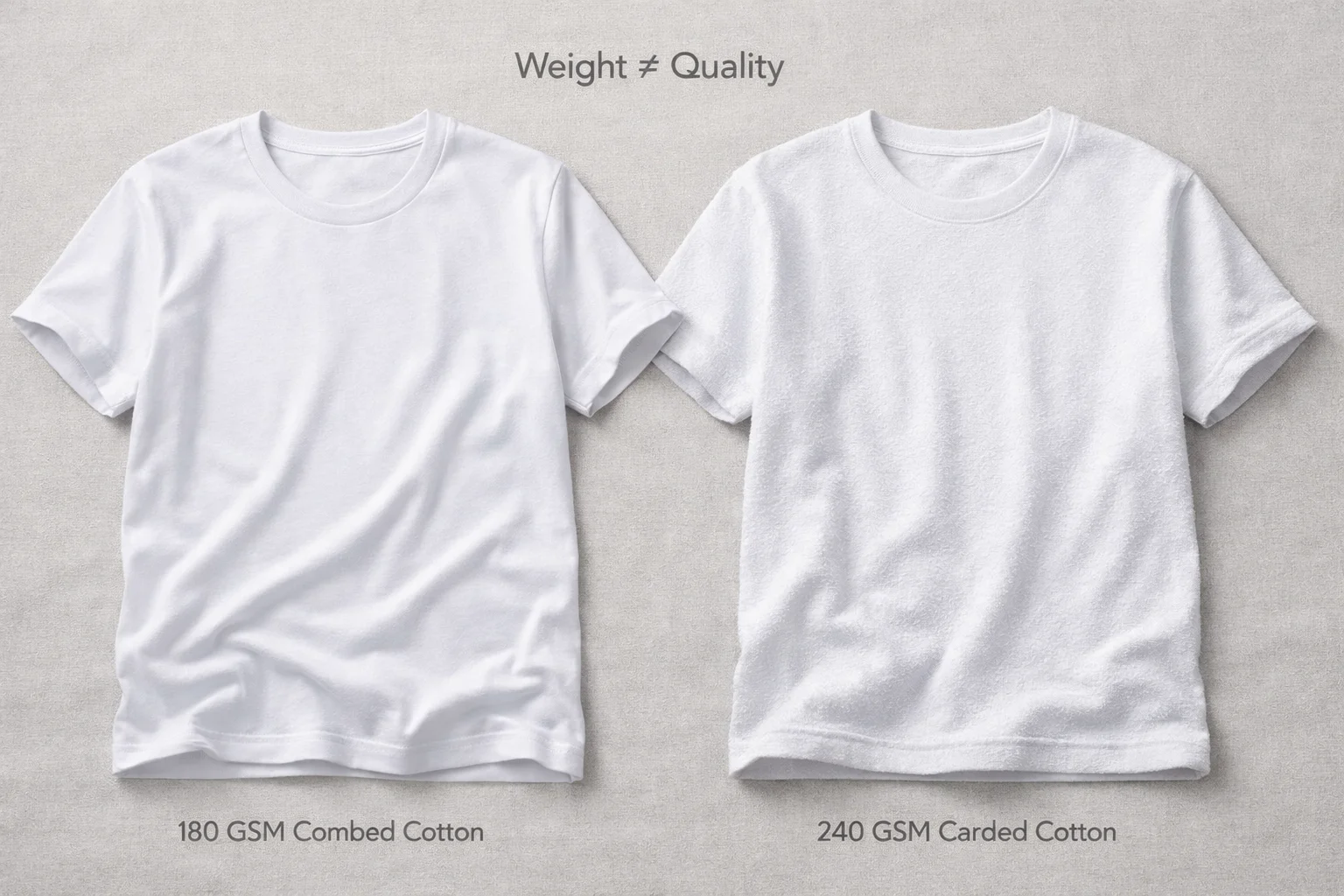
Consumers are tired of “disposable” t-shirts that lose their shape or shrink significantly after the first laundry cycle. They are now looking for “investment basics.” A wholesale organic t-shirt, particularly in the 180 GSM to 240 GSM (Heavyweight) range, offers the structural integrity that modern consumers crave.
Transparency and Traceability
In 2026, a “Made in…” label isn’t enough. Buyers want to see certifications. Organizations like GOTS (Global Organic Textile Standard) and OCS (Organic Content Standard) provide a transparent paper trail from the farm to the finished wholesale blank. For a business, carrying GOTS-certified inventory is a shield against “greenwashing” accusations and a magnet for high-ticket retail partnerships.
4. Customization and Printability: A Printer’s Dream
Wholesale t-shirts are rarely sold as-is; they are the canvas for screen printing, DTG (Direct-to-Garment), and embroidery.
Direct-to-Garment (DTG) Performance
Organic cotton provides a superior surface for DTG printing. Because the fabric hasn’t been coated in synthetic chemicals or waxes during production, the water-based inks used in DTG printers penetrate the fibers more effectively. This results in more vibrant colors, sharper details, and better wash-fastness.
Screen Printing and Curing
Standard cotton often suffers from “dye migration” or scorching under high-heat flashes. Organic cotton, treated with natural dyes, is generally more stable. For high-end customization like 3D Puff Embroidery or High-Density Screen Printing, the dense, consistent knit of premium organic blanks prevents the fabric from puckering under the weight of the thread or ink.
5. The Economic Logic: Cost vs. Value
Critics often point to the higher price point of organic wholesale blanks. However, the “Value Per Wear” metric is redefining the 2026 market.
While the upfront cost is higher, the return on investment (ROI) for a brand is significantly better. Organic t-shirts command a higher retail price, often allowing for better margins despite the higher wholesale cost. Furthermore, the lower return rates due to superior quality save businesses thousands in logistics and customer service costs.
6. Trends in Fabric Weight: The Rise of the Organic Heavyweight
In 2026, the “heavyweight” trend has collided with the “organic” trend. Streetwear brands are moving away from the thin 140 GSM shirts of the past.
- The 180 GSM “Essential”: The perfect mid-weight for everyday retail. It offers breathability without being transparent.
- The 240 GSM “Street-Luxury”: A thick, structured fit that hangs off the shoulders perfectly. When made from organic cotton, this fabric feels incredibly substantial and premium, distinguishing a brand from “cheap” competitors.
7. Regulatory Pressures and Corporate Responsibility
Governments worldwide are introducing legislation regarding textile waste and chemical usage. In 2026, many wholesale distributors are switching to organic simply to stay ahead of the law. Extended Producer Responsibility (EPR) laws mean that brands are now responsible for the lifecycle of their products. Since organic cotton is 100% biodegradable (when paired with natural dyes and threads), it presents a much lower “end-of-life” risk for corporations.
8. Ethical Labor: The Human Side of Organic
Organic certification (especially GOTS) isn’t just about the plants; it’s about the people. It prohibits forced labor and child labor while ensuring fair wages and safe working conditions. In an era where “Social Audits” are common, wholesale buyers can sleep better knowing their supply chain isn’t built on exploitation. This ethical narrative is a powerful marketing tool for any brand using these t-shirts.
9. How to Source GOTS-Certified Suppliers in 2026
Finding a supplier is easy; finding a certified, reliable partner is where most wholesale buyers fail. In 2026, “greenwashing” is at an all-time high, making verification more important than ever.
Verify the Transaction Certificate (TC)
Don’t just take a supplier’s word or look at a logo on their website. Every batch of organic t-shirts must come with a Transaction Certificate (TC). This document proves that the specific goods you are buying have been tracked from the organic farm through the ginning, spinning, and knitting stages. If a supplier cannot provide a TC for your specific order, the organic claim is legally void.
Use the GOTS Public Database
The most direct way to source is via the GOTS Public Database. You can search by “Product Category” (e.g., T-shirts) and “Country.” This ensures you are dealing with a manufacturer that undergoes annual on-site inspections for both environmental and social criteria.
Audit the Factory’s Customization Capabilities
An organic t-shirt is only as “organic” as its weakest link. If you are sourcing blanks for printing, ensure the supplier uses GOTS-approved inks and dyes. Standard plastisol inks contain PVC and phthalates, which contradict the purpose of an organic garment. Ask your supplier if they offer:
- Water-based discharge printing.
- Lead-free embroidery threads.
- Biodegradable poly-bags for shipping.
10. Marketing Organic Apparel to Gen Z and Gen Alpha
By 2026, Gen Z and Gen Alpha hold the majority of discretionary spending power. These generations are “digital natives” who can spot a fake marketing campaign in seconds. To sell organic wholesale t-shirts to this demographic, you need to change your messaging.
From “Eco-Friendly” to “Radical Transparency”
Generic terms like “eco-friendly” are dead. Modern consumers want specifics. Instead of saying “Our wholesale t-shirts are green,” use data-backed storytelling:
- “This t-shirt saved 2,100 liters of water compared to your old favorite tee.”
- “Grown without 16% of the world’s pesticides.”
- Show behind-the-scenes footage of the farm and the factory workers.
The “Quality-First” Narrative
While they care about the planet, they won’t buy an ugly or poorly fitted shirt. Lead with the aesthetic and durability. Position organic cotton as a “Luxury Performance” fabric. Use terms like “Heritage Quality,” “Structured Fit,” and “Lived-in Softness.” In 2026, the trend is “Buy less, buy better.” Your marketing should emphasize that an organic t-shirt is a “forever piece,” not a “for-now piece.”
Leveraging QR Codes on Hangtags
A major trend for 2026 is the Digital Product Passport (DPP). Include a QR code on the t-shirt’s neck label or hangtag that, when scanned, shows the customer the journey of that specific shirt from the cotton field in Izmir or Punjab to the warehouse. This level of transparency builds an unbreakable bond of trust with the consumer.
Conclusion: The Future is Organic
As we look at the wholesale landscape of 2026, the conclusion is clear: The era of cheap, chemically-laden wholesale t-shirts is fading. Organic cotton has proven itself to be technically superior, commercially viable, and ethically necessary.
For wholesale buyers, the transition to organic is an investment in brand longevity. Whether you are a small startup launching your first collection or a large-scale distributor supplying thousands of units, choosing organic cotton is the most effective way to align with the values of the modern world.
Organic cotton isn’t just a “trend” anymore. It is the foundation upon which the future of the apparel industry is being built. By choosing organic, you aren’t just buying a t-shirt; you are buying into a sustainable, profitable, and high-quality future.